ISD NEWSLETTERS
ISD Insights is our monthly newsletter which delivers all the latest research and analysis directly to your inbox. To sign up for Insights, please complete the form below.
Insights No. 38
ISD released a new report detailing the depth and breadth of the ecosystem of pro-Islamic State ‘media outlets’ across social media. Our study, “The Terror Times“, authored by Moustafa Ayad, ISD Executive Director for Africa, Middle East and Asia, and researchers Nadeem Khan and Aymenn al-Tamimi, found 38 outlets across Facebook, Twitter, TikTok and Instagram, with a collective following of 108,268. Some of the posts from these pages had garnered over a million views in a year, a number far larger than their following, indicating their propaganda has spread much wider than their core audience.
This report details the resilience mechanisms pro-Islamic State outlets are using to remain online despite the moderation efforts of social media companies. It also provides key recommendations for how both tech companies and governments can tackle the problem of terrorist propaganda being spread online.
Also in this newsletter:
- Dispatch: Unpicking pro-Kremlin attempts to link the Baltic States with Nazism
- Dispatch: The conversation about Australia’s Indigenous Voice to Parliament is at risk from disinformation and conspiracy theories
- ISD research featured in articles and news segments such as CBS’s Face the Nation, ABC, Insider, DW and more.
Insights No. 37
A mere handful of Western influencers who are spreading pro-Kremlin misinformation about the war in Ukraine are enabling Russia to circumvent attempts to prevent its spread. ISD researchers identified 12 influencers from eight Western countries who have been reporting from Ukraine. The influencers have successfully amplified pro-Kremlin narratives, reaching hundreds of millions worldwide. Their content also features copies of Russian state media outputs, such as RT videos, which allows them to evade platform moderation and automatic disclaimer labels. Their posts have also been boosted by various Russian actors, such as government officials, diplomatic accounts and state media actors. To read this report, please contact us here.
Also in this newsletter:
- Monkeypox and ‘groomers’: How Twitter facilitated a hate-riddled public health disinformation campaign
- Error 404: RELIABLE INFORMATION NOT FOUND
- The impact of election disinformation narratives on France’s online communities
- Russian sympathisers label Finland fascist following its bid to join NATO
- Tales from the underside: A Kremlin-approved hack, leak & doxxing operation
- Intimidation tactics: A case study of digital violence against election candidates
- ISD staff feature in articles and news segments such as C-SPAN, NPR, Salon, Newsy, The Hill. New Lines, Yahoo News and Insider.
Insights No. 36
The rights of LGBTQ+ people in the US are under sustained assault from far-right pundits, politicians and social media influencers.
These groups are using the monkeypox outbreak as a new opportunity to attack these people. ISD Analyst Aoife Gallagher wrote about the failure of Twitter to take seriously the threat to LGBTQ+ people posed by public health disinformation narratives attempting to link monkeypox in children to sexual contact with gay men. This ties in to the homophobic ‘groomer’ narrative, pioneered by the Twitter account ‘Libs of TikTok’, which directs a swarm of followers towards, among others, teachers in the US who are openly LGBTQ+, accusing them of ‘grooming’ their students.
Also in this newsletter:
- Contextualising rhetoric around ‘fascism’ targeting Ukraine and Western support
- A snapshot of pro-Kremlin narratives framing NATO as a ‘neo-Nazi’ and ‘White Supremacist’ organisation
- The aftermath of pandemic disinformation trends: what can be done now?
- Odysee, the latest right-wing extremist alt-platform with a twist
- ISD staff feature in articles and news segments such as LBC, Irish Examiner, Guardian, Washington Post and CNN.
Insights No. 35
In July, ISD’s Head of Digital Integrity, Jiore Craig, testified before the U.S. House Committee on Administration on the growing threat of election disinformation from foreign and domestic sources. Domestic disinformation targeting voters remains a substantial threat to democracy. It is critical for platforms and policymakers to address systemic failures rather than focusing on content alone.
Jiore told Congress, “We cannot just debate which meme is more rooted in fact, or we will stay frozen in false debate around content where only those benefitting from disinformation win and the American people lose. We need to debate which systems at play in disinformation should change to end the downward spiral of trust that Americans have started to have in their own democracy and even more important, in each other”.
The full hearing, including Jiore’s statement and answers to questions by members of the Committee, is available on ISD’s website.
Also in this newsletter:
- Propaganda primping: The ‘Kremlinistas’ of Twitter
- RT articles are finding their way to European audiences – but how?
- Iraqi gun sales on Facebook: The very real consequences of moderation failures
- Researching the evolving online ecosystem: barriers, methods and future challanges
- The impact of the Russia-Ukraine war on French-speaking fringe communities online
- The 2022 French elections expose the divisions wrought by the pandemic
- Our staff feature in various media pieces including POLITICO, the New York Times, the AD, Axios, and El País.
Insights No. 34
On 4th July, a shooter opened fire at a parade in Highland Park, Chicago, killing seven. ISD’s rapid response and analysis identified this as a clear example of the awful form that hybridised threats to democracy can take. The suspect has no explicit ideological motive. He was, instead, immersed in communities that glorify violence, as explained by Melanie Smith, Head of ISD’s Digital Analysis Unit, in an interview with NPR. This shooter’s actions resemble more those of a school shooter than a typical terrorist, but the deadly effects are the same.
The Highland Park shooting underlines how critical it is to better understand the hybridised nature of the online threat landscape. ISD’s report Mainstreamed Extremism and the Future of Prevention outlines the very real risks that this folding together of extreme ideologies and aesthetics, simmering hatred, and ubiquitous conspiracy theories, pose to democracy.
Also in this newsletter:
- Our analysis of deadly disinformation about Syria
- Russia Today digs deep to stay on YouTube
- The ‘Info Defense’ network: Crowdsourcing soldiers for the information war
- ISD insights features in various media pieces including leading German investigative TV magazine ARD Kontraste, Bloomberg, VICE and NPR.
Insights No. 33
During the recent French elections, Russia’s ability to undermine the legitimacy of the presidental and parliamentary elections through social media manipulation was dampened. This was mainly thanks to the EU-wide ban on its state-controlled media as a result of its invasion of Ukraine.
However, elections remain a moment when social media’s vulnerability to manipulation to bad actors is exposed. It is heartening therefore that this recently published report by the Online Election Integrity Watch Group, in which ISD participates, showed that the impact of attempts to manipulate the information environment during the French elections was limited. This was primarily due to a more robust information ecosystem that is structurally difficult to manipulate without a substantial resource investment. Our recently released report explains why bad actors were unable to impact the election.
Nevertheless, pro-Kremlin information operations are continuing. An ISD investigation explored how Project Nemesis, a pre-Kremlin doxxing operation, is being used in Ukraine, with doxxing – the malicious sharing of opponents’ personal information – rapdily becoming a new frontier of informational warfare. Also in this newsletter:
Insights No. 32
During COP26, ISD’s “war room” monitored online climate mis- and disinformation content intended to undermine climate action. This work put climate disinformation on the map, with the most recent IPCC report referring for the first time to deliberate attempts to undermine climate science by those with vested economic and political interests. This week, ISD followed up with a major report, Deny, deceive, delay: Documenting and responding to climate disinformation at COP26 and beyond, launched at the UN’s Climate Change Conference in Bonn, Germany. The report maps and analyses the climate disinformation ecosystem, and provides recommendations for actions by policymakers, regulators and tech companies.
Also this week, we launched a report based on two years of research into terrorist content on Facebook in East Africa. This report documents the unmoderated and unchecked spread of pro-al-Shabaab and Islamic State content on the platform and beyond. Also in this newsletter:
- Amnesty International released a statement expressing concern over our findings in East Africa, and calling on Facebook and government agencies to assist in mitigating further threats to digital democracies.
- Dispatch: Unsubstantiated claims of foreign meddling will sow division and damage democracy
- Antisemitic hate network manipulates media coverage to amplify its propaganda
- ISD joined the Spotify Safety Advisory Council
- ISD analysts offer commentary in various media pieces including The Conduit, Radio Télévision Suisse, the BBC, Newsweek.
Insights No. 31
Conspiracy theories “thrive” in the immediate aftermath of a crisis, said ISD’s Head of Analysis Unit Melanie Smith in a conversation with Grid News about the horrific Uvalde, Texas, school shooting in late May. Following the tragedy that left 21 dead, including 19 children, fringe media and extremists once again began to post “false flag” operation narratives and revived other theories related to the timing the massacre.
But this pattern isn’t limited to events like these. Since our last Insights, ISD has been monitoring online discourse related to the ongoing outbreak of monkeypox. In a recent Dispatch, we outline the most prominent conspiracy theories from right after the outbreaks began and found they were “cut-and-paste” versions of COVID-19 narratives that emerged in 2020. In similar fashion, following the defeat of Australia’s self-described “freedom friendly minor parties”, many in Australia adopted US fraud narratives to justify their almost-complete loss. Also in this newsletter:
- The ‘Great Reset’ conspiracy in Australia
- What China’s sweeping algorithm regulation means for digital governance globally
- Russian propaganda about the invasion of Ukraine spreads on Facebook around Victory Day
- ISD analysts offer commentary in various media pieces including Grid News, the BBC, ABC News and VICE News.
Insights No. 30
Following the 14 May act of terrorism in Buffalo, New York, ISD analysed the resulting discussion online. We produced a Dispatch on the attempts made by a variety of actors to link the perpetrator to Azov Battalion, a regiment in the Ukrainian army with white supremacist links. Much like other recent acts of white supremacist terrorism, the shooter claims to have been inspired by the ‘Great Replacement’ conspiracy theory. ISD has warned that this is becoming increasingly mainstreamed in 2019 in the aftermath of the Christchurch attack. This attack and the ecosystem in which the shooter was radicalised demonstrate the hybrid nature of the threat: extremist ideology, bolstered by radicalised conspiracy theories, motivated by hate. We will continue to work tirelessly to mitigate these threats. Also in this newsletter:
- Our practical guide to tackling antisemitism is now available in German
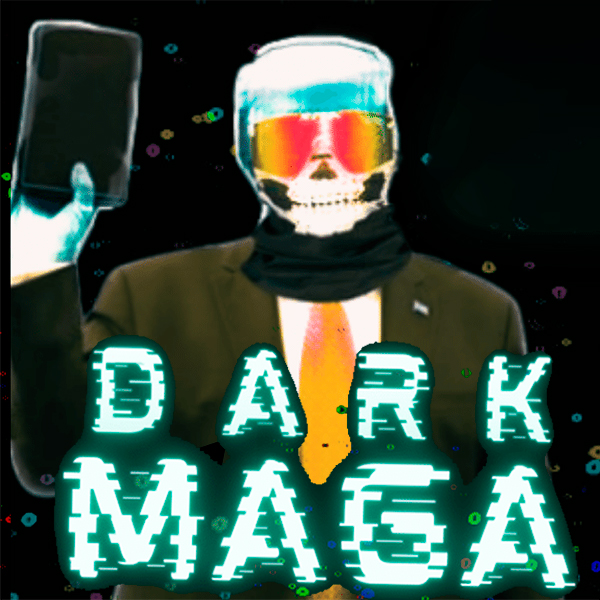
- Dark MAGA: The latest cycle in the far-right aesthetics laundromat
- Unprompted and unwarranted: YouTube’s algorithm is putting young men at risk in Australia
- After Bucha, here’s what to expect from the next phase of Russian disinformation in Ukraine
- YouTube’s Super Chats tool enables the platform to profit from misinformation
- ISD features in various media pieces including, Channel 4, BBC World News, VICE News, Tortoise, NBC, and Bloomberg.