For 20 years, ISD has delivered field-leading threat detection, analysis and real-world strategies to combat terrorism, extremism and authoritarianism - in all their ideological forms.

Home / Insights

ISD NEWSLETTERS

ISD Insights is our monthly newsletter which delivers all the latest research and analysis directly to your inbox. To sign up for Insights, please complete the form below.

Insights No. 26

As Russia’s invasion of Ukraine enters its second month, ISD is focussing on the concurrent information war. Our research shows how pro-Kremlin narratives are seeping into the mainstream, slowly engraining into conspiracy groups, exploiting wedge issues to create a chaotic information environment and prevent public opinion hardening against Russia.

We’ve exposed how RT is circumventing social media restrictions with the assistance of their fanbase, and the Kremlin’s use of traditional Cold War propaganda in the form of ‘whataboutisms’. Our CEO Sasha Havlicek appeared on Radio 4’s Today discussing the last two decades of Western response to Putin, while Julia Smirnova helped the Washington Post debunk a viral video claiming the death of a German boy was caused by Ukrainian refugees, and Elise Thomas spoke with the New York Times about the Kremlin’s pragmatic approach to propaganda narratives. Also in this newsletter:

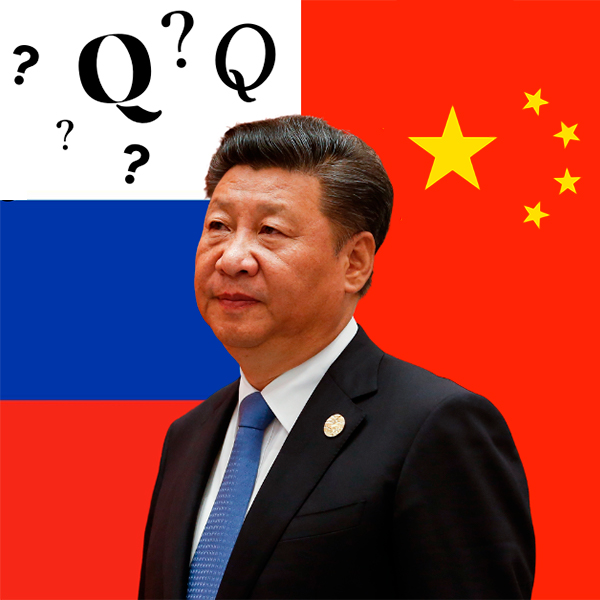
  • QAnon’s imminent pro-China shift?
  • Gettr’s failure to launch in France and Germany
  • Anti-lockdown analysis: US and Italy
  • New war, old Soviet propaganda tactic: ‘whataboutism’
  • Why Western conspiracy influencers are promoting pro-Kremlin propaganda

ISD News:

  • Webinar alert: The Strong Cities Network invites you to their next Together for Safety series webinar, Safe City Governance: The Role of Networks and Alliances, on 7 April. More info here.

For more of our ongoing Russia-Ukraine analysis, visit our regularly updated hub.
Insights No. 25

The ISD team has been mobilising its counter-disinformation operation around the unfolding human tragedy in Ukraine, which will shape our geopolitical landscape for decades to come.

We are providing continuous analysis across our areas of expertise, focusing on the spread of disinformation on TikTokFacebook and Telegram, while also identifying pro-Kremlin influence operations on Twitter. Our CEO, Sasha Havlicek, joined Sky News’ ‘The Great Debate’ discussing the Ukraine/Russia conflict, while Julia Smirnova helped POLITICO understand how Telegram has become a central hub for Russian state narratives, and Ciaran O’Connor spoke to AP News about his research on pro-Kremlin disinformation on TikTok. Also in this newsletter:

  • Hate and harassment during the 2021 German federal elections
  • Conspiracy clickbait networks seize opportunity to run ‘Freedom convoy’ Facebook groups
  • The problem with preprints

ISD News:

  • Last call for our final session of the Be Internet Citizens programme
  • Webinar alerts: Conversions & convergence: Side-switching extremists and the threat of reciprocal radicalisation (16 March); Safeguarding Local Democracies (17 March).
  • Podcast: Jennie King talks to Stop Funding Heat about the latest trends in climate mis- and disinformation.

Insights No. 24

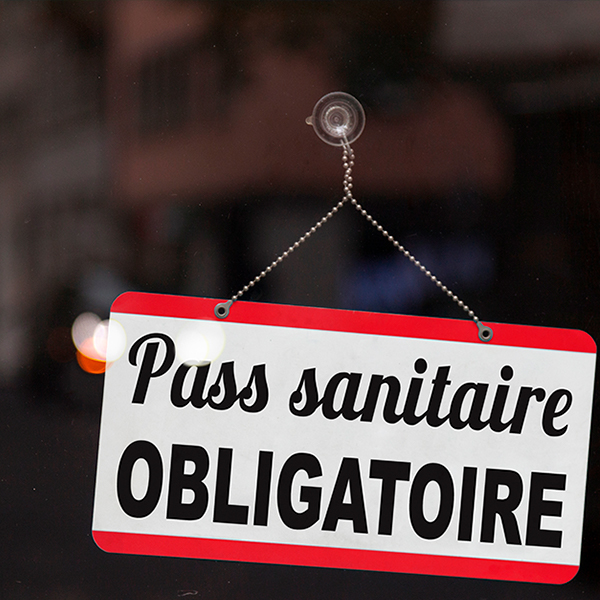
In this issue of Insights, ISD reports on two years of research on Australian political fringes, analyses identitarian mobilisation around the 2022 French presidential election, tracks growing online sales of fake COVID-19 health passes in France, and takes an in-depth look at German-language antisemitic YouTube video comments. Also in this newsletter:

Events:

Media: 

  • Ciarán O’Connor speaks to France 24 on the connections between the Canadian truckers’ convoy, the North American far right, and how that translates across the Atlantic.
  • ISD’s CEO Sasha Havlicek featured on BBC Radio 4’s series ‘Death by Conspiracy’ to talk about the changing social media landscape, algorithms and the pressure the pandemic put on existing models.
  • Elise Thomas features in Australia’s national broadcaster’s (ABC) 7.30 on the ‘Canberra Convoy,’ discussing the eclectic nature of the protests taking place in the country’s capital, a movement that may be small in numbers but loud in significance.
  • Moustafa Ayad spoke to POLITICO about ISD’s research into online Islamist networks on mainstream social media, despite platform policies banning extremist content.

Insights No 23

In this issue of Insights, ISD tracks the uptick in far-right Identitarian activity during the ongoing French presidential campaign; releases two new country profiles in the anti-lockdown series; and offers analysis and commentary on the Canadian truckers’ convoy and its international copies. Also in this newsletter:

Events: 

Media: 

  • Ciaran O’Connor speaks to POLITICO on how support for the Canadian truckers’ convoy from U.S. political figures and content creators gave the protests the push needed to appeal to a global audience.
  • Iris Boyer and Zoe Fourel were featured by Ouest France regarding their research on the sale of French COVID-19 vaccination certificates across social media platforms.
  • Tim Squirrell spoke to LBC about mainstreamed extremist narratives in the wake of the confrontation of Sir Keir Starmer outside of Parliament after false accusations that he chose not to prosecute Jimmy Savile.
  • Simeon Dukic discusses leading ISD research on online extremism in North Macedonian during a television interview with Sitel TV.

Insights No 22

Highlights:

In this issue of Insights, ISD sheds light on the highly lucrative business behind conspiracy clickbait, exposes signals of coordinated behaviour between pro-CCP influencers and analyses Novak Djokovic’s influence in the Australian anti-vaxx sceneAlso in this newsletter:

Events: 

  • Strong Cities Network webinar on 2 February: Rehabilitation & reintegration of family members of foreign terrorist fighters: the roles of cities and other local actors. Sign up here.
  • ISD’s Jiore Craig joins Doctors for America for a virtual event on 10 February. Sign up here.

Media: 

  • Aoife Gallagher and Ciarán O’Connor spoke with VICE News about the recent controversy surrounding Djokovic’s vaccine status at the 2022 Australian Open.
  • ISD’s Tim Squirrell comments to The Guardian about the need for support services “and other kinds of non-securitised intervention” for at-risk young men in online incel forums who are instead getting caught up in counter-terrorism programmes.
  • Analyst Richard Kuchta spoke with RTVS, the national Slovak broadcaster, about how social media bans are rarely applied in cases of community standard violations as platforms attempt to retain users from going elsewhere.
  • Speaking with AP News on his latest reportCiarán O’Connor explains how COVID-19 fears have ultimately been exploited by conspiracists to attract new recruits “whose loyalty may outlast the pandemic.”

ISD’s Year Ahead: 2022

In this special issue, we share with you an exciting preview of what lies ahead in 2022 across our regional teams, research and programming, and hope you’ll join us as we continue to work for a brighter and more hopeful year! 

With 2021 now in the rearview, our teams are gearing up to bring you the latest analyses around disinformation, hate and extremism in numerous spheres and as many countries prepare for election years. We are particularly excited about the expansion of ISD-US in 2022, and the Strong Cities Network soon to be running regional hubs in the Balkans, West Africa, the Middle East and South Asia. Here are some highlights from this issue:

Insights No 21

Highlights:

In this issue of Insights, ISD breaks down the anti-lockdown movements in Canada and Ireland, releases a prototype taxonomy for classifying terrorist and violent extremist content, and lays bare a global network pushing to undermine women’s and LGBTQ+ rights in Hungary. Also in this newsletter:

Events:

  • ISD’s Milo Comerford and Moustafa Ayad were hosted by the Program on Extremism at George Washington University for a virtual discussion event on Salafism and Alt-Right Online Subcultures.
  • Jennie King, who recently led ISD’s efforts in tracking climate change misinformation during COP26, joins Kantar Public experts to discuss climate change disinformation.

ISD in the Media:

  • Moustafa Ayad wrote an op-ed for WIRED about Gen-Z jihadists and the varying aspects that influence their outlooks and social media use as the post-September 11 generation.
  • ISD’s Jacob Davey spoke with Sky News on their investigation into openly available antisemitic, racist, and generally extremist podcast material on Spotify.
  • Aoife Gallagher features in this article by VICE News on the growing interconnectedness between the far-right and antivaccine movements in countries around the world.
  • ISD’s Paula Matlach spoke with the Berliner Morgenpost on our findings from the 2021 German federal elections.

Insights No 20

Highlights:
In this issue of Insights, ISD sheds light on a significant but little-known extremist ecosystem on Instagram, the German far-right’s tactics during the recent federal elections, and how to better detect hate speech on video platforms like YouTubeAlso in this newsletter: 

Events:

  • As part of the United States Summit for Democracy series, ISD brought together experts for a closed discussion on the issue of data provision from online platforms for research.
  • Our Strong Cities Network hosted the virtual Africa Summit: Supporting City-Led Efforts to Address Hate, Polarisation and Extremism, alongside the County Government of Mombasa and the Kilindini Coalition. 
  • On 1 December, ISD convened government officials and regulators from Five Eyes and European countries for a session of the Digital Policy Lab focused on threats to election integrity.
  • As part of a project funded by the German Federal Ministry of Justice and Consumer Protection (BMJV), ISD Germany recently held its first annual expert conference “In the Blind Spot – How Right-Wing Extremists Use Alternative Online Platforms for Radicalisation” in Berlin.

ISD in the Media:

Insights No 19

Highlights:
In this issue of Insights, ISD takes a deeper look at the rapidly evolving online Salafi ecosystem, uncovers the re-emergence of a pro-Russian propaganda outlet on Facebook, and finds that TikTok is failing to tag almost 60% of COVID-19 vaccine-related content, while YouTube is failing to remove antivaxx misinformation more broadly. Also in this newsletter: 

Events:

ISD in the Media:

Insights No 18

Highlights:

Speaking engagements:

  • ISD’s Jennie King and Chloe Colliver joined the EU Disinfo Lab’s annual conference in their return to physical format in Brussels.
  • Our Jacob Davey participated in the opening conference of RUSI’s Far-Right Extremism and Terrorism (FRET) Research Programme. Watch it here.

ISD in the Media: