For 20 years, ISD has delivered field-leading threat detection, analysis and real-world strategies to combat terrorism, extremism and authoritarianism - in all their ideological forms.

Home / Insights

ISD NEWSLETTERS

ISD Insights is our monthly newsletter which delivers all the latest research and analysis directly to your inbox. To sign up for Insights, please complete the form below.

ISD 2022 Highlights

Dear Friends and Partners,

We couldn’t do what we do without your partnership and support! This year our research teams have shown how extremists, conspiracy networks, hate groups and authoritarian states borrow from each other’s playbooks and amplify each other’s narratives. We have shown repeatedly how profits are being made from hate and disinformation and how social media products and algorithms are supercharging everything from electoral disinformation to misogyny.

Our digital policy team has used this insight to move the needle on tech platform action and regulation and where bad actors seek to exacerbate division and undermine trust, we have built out our programming to meet the evolving challenge. In 2022, our teams helped safeguard elections in the US, France, Kenya, and Australia, protect targeted communities from harassment and violence, and counter conspiracy and disinformation on Ukraine, climate, migration and public health.

Alongside the significant expansion of ISD US and ISD Germany this year, our Strong Cities Network (SCN) launched the build-out of regional hubs – from East and Southern Africa to MENA and the Western Balkans – serving mayors and local leaders, sharing and delivering good practices and training to address threats where they are felt most acutely, at a local level within communities around the world.

Below you will find highlights from our work in 2022. As we move into 2023, your continued support and partnership are crucial to us. With immense gratitude from all of us here at ISD, we wish you a peaceful and happy new year, and look forward to working together in 2023!

Sasha Havlicek, CEO

Research highlights

  • Mitigating new frontiers in disinformation: Elections, Ukraine, Climate and more
    • Safeguarding elections
    • Countering disinformation on Ukraine
    • Driving action on climate disinformation
  • Research and action on conspiracy, extremism and hate
    • Misogyny and targeted hate against women
    • Targeted hate against LGBTQ+ people
    • Research and action on antisemitism
  • Tech platform accountability and action
    • Evidencing platform harms
    • Digital policy and regulation
  • Strong Cities Network

ISD US Newsletter #1

Since 2006, ISD has been at the forefront of analyzing and delivering solutions to weaponized hate, disinformation and extremism around the world. The events of January 6th underscored the urgency of turning the tide on these threats before their impact becomes insurmountable. Already in 2020, ISD broke new ground working with US partners to safeguard the elections. This year, we took the decision to significantly scale up ISD-US, establishing a real-time extremism and disinformation threat monitoring and response capability in the lead up to the midterms. Combining advanced digital analysis of the threat landscape with communications and training on the front line, our US team worked to prevent violence, evidence the role of social media platforms in the proliferation of disinformation and hate, and protect the integrity of the election. This newsletter is a snapshot of recent ISD-US highlights.

In this newsletter:

  • Safeguarding Democracy; Protecting Communities; Countering Disinformation
    • Five key trends around the 2020 midterms
    • ISD research on the targetting of female candidates during midterms
    • Hate merch on major e-commerce sites Etsy, Redbubble and Teepublic
    • Upward trend of hate targeting the LGBTQ+ community
  • Building Resilience; Preventing Violence and Extremism
    • Threat detection and prevention
    • Building capacity for extremism prevention and interventions
    • The Strong Cities Network
  • Tech Platform Accountability and Action
    • Roe v. Wade
    • Election disinformation
    • Elon Musk and Twitter

Insights No. 44

In December, German authorities arrested over 20 people accused of plotting a coup to overthrow the German government. They were part of a movement similar to ‘sovereign citizens’ called the Reichsbürger. In light of these arrests, ISD’s Senior Manager of Policy & Research Jakob Guhl and Research Manager Dominik Hammer wrote an Explainer of the movement, their beliefs and how they overlap with QAnon and other conspiracy theories and extremist ideologies.

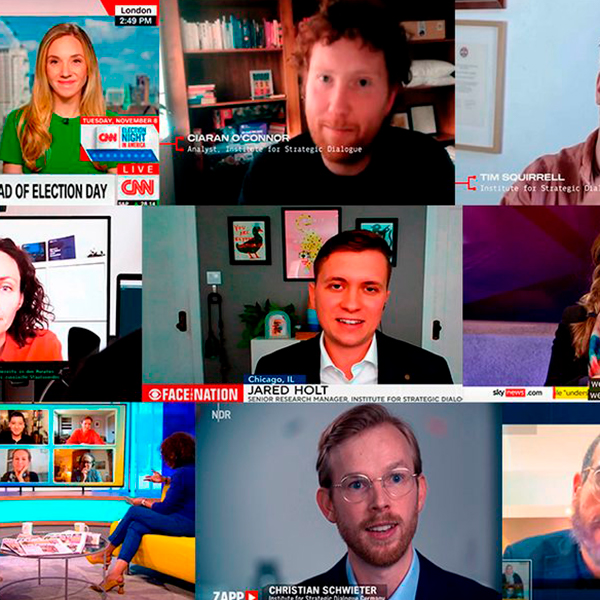
Jakob, along with Senior Fellow Julia Ebner, provided expert commentary in the aftermath of these arrests, which saw concerning numbers of individuals with military backgrounds involved in a plot to overthrow the German government. His commentary appears in Vice NewsThe Independent, and Newsweek, to name a few, while Julia appeared on The News Agents podcast.

Also in this newsletter:

  • Tim Pool and YouTube profit from antisemitic Super Chats posted during Pool’s Ye Interview
  • Prevention Practitioners Network launches training materials to prevent targeted violence and terrorism among communities
  • ISD researchers feature in news pieces for the Washington Post, Euronews, Insider, VICE News and more.

Insights No. 43

On the night of November 19, five people were killed and dozens injured in a mass shooting at an LGBTQ+ bar in Colorado Springs. The alleged shooter faces hate crime charges. Details continue to emerge, but the attack has exacerbated an already heated discourse. As ISD has noted, LGBTQ+ people in the US and elsewhere are increasingly being slurred as ‘groomers’ and ‘pedophiles’, with politicians and commentators invoking old baseless myths to roll back years of progress on rights and acceptance.

ISD found a substantial increase in engagement with posts using the terms ‘groomers’ and ‘pedophiles’ in the aftermath of the attack, as well as celebration from accelerationist neo-Nazi groups, and posts sympathetic to the attack from right-wing influencers.

Also in this newsletter:

  • Colorado Springs shooting: The latest in a transnational, upward trend of anti-LGBTQ hate
  • What the UK migrant centre attack tells us about contemporary extremism trends
  • Explainer spotlight: Sovereign Citizens movement
  • ISD analysts feature in news pieces from Mother Jones, MSNC, Euro News, Axios and more.

Insights No. 42

ISD and CASM Technology are pleased to announce the launch of our Beam website. Beam began as a partnership between ISD and CASM in 2015 which, from the beginning, had two key emphases: the capability to detect information threats at scale, and empowering more effective ways of responding to them. Since then, our award-winning technology has paved the way for researchers to custom design their own data collection and analysis ‘architectures’ by bringing data from various social media platforms under a single format. Users can then categorise data, analyse behaviour and identify trends among communities. Information can be synthesised into outputs including dashboards, data visualisations, regular reporting and alerts. This technology has been the basis for investigations of election disinformation in the US, Australia and France; information operations and disinformation about the Ukraine and Syria conflicts; climate disinformation in and around COP26 and COP27; and more. More information on Beam and how to get involved is available on our website.

Also in this newsletter:

  • Election disinformation thrives following social media platforms’ shift to short-form video content
  • Social media platforms and the drop box monitoring ecosystem
  • Explainer feature on the ‘New World Order’
  • ISD analysts feature in news pieces from BBC Panorama, POLITICO, Bloomberg, AP, the Washington Post and more.

Insights No. 41

As the US midterms approach, ISD analysts are monitoring threats to officials, election workers and voters, across a range of online spaces, with increased concern. On the same day as Head of Elections Jiore Craig spoke to CNN about the risks posed by poll watchers, a man allegedly sought to kidnap or assassinate Speaker of the House, Nancy Pelosi. Suspect David DePape is alleged to have attacked her husband with a hammer and has being charged with, among other things, attempted murder. ISD’s analysis of suspect DePape’s online footprint and conspiratorial beliefs led ABC News’ coverage of the attack.

Also in this newsletter:

  • 100 Days after US Supreme Court decision overturns Roe v. Wade: Are platforms doing enough?
  • First evaluation of London’s Shared Endeavour Fund: £800,000 awarded to 31 projects addressing intolerance, hate & extremism
  • ISD Germany researches right-wing extremist online subcultures: reports now available in English
  • Climate Action Against Disinformation’s (CAAD) COP27 Intelligence Unit, overseen by ISD, launches its COP27 newsletter

Insights No. 40

New research from ISD highlights the failure of social media platforms to set policy, and act, on abortion misinformation. In the aftermath of the leaking of the US Supreme Court’s decision on the Dobbs v Jackson Women’s Health Organization, which had the effect of overturning Roe v Wade, misinformation about abortions as well as about ‘abortion reversal’ pills and procedures ran rampant across Facebook, Instagram, YouTube and TikTok.

As the US midterms loom, platforms are under pressure to make the right calls on preventing the spread of mis- and disinformation about the elections. Their reaction to the overturning of Roe v Wade and the resulting huge change in access to abortions for many, is in some sense a test-run for this. The platforms had substantial notice that this outcome was likely, and therefore had time to create and enforce policies on misinformation about abortion. They mostly failed to adopt policies to deal with this, and where they did so those policies were inadequately enforced. This does not bode well for the likelihood that they will act decisively on mis- and disinformation related to the midterms. This is especially concerning given the importance of these midterms, which will act as an inflection point for the survival of American democracy itself.

Also in this newsletter:

  • Violence in Leicester, UK: Understanding online escalation and offline fallout
  • Eight trends from election denialists to watch in the US midterm elections
  • How QAnon conspiracy theories legitimise coordinated and targeted gender-based violence
  • Have the EU sanctions against Russian-state media worked? ISD finds steady website traffic & circumvention methods at play
  • Inside the ‘Journalisten Friekorps’, a pro-Kremlin influence operation

Insights No. 39

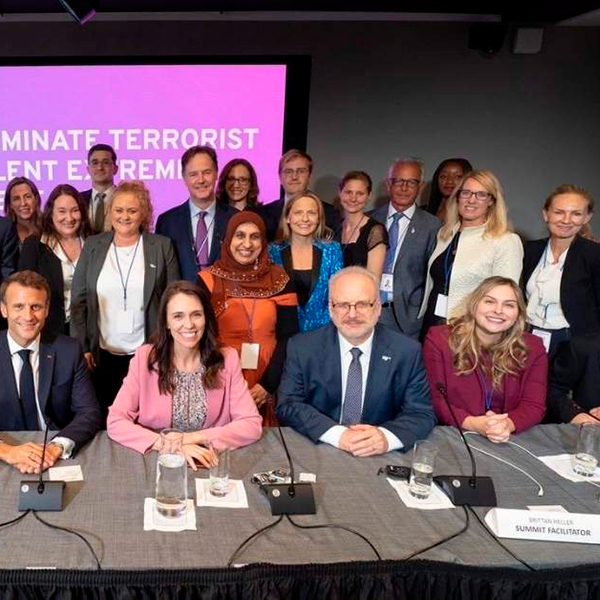
ISD CEO Sasha Havlicek was honoured to address the Christchurch Call Leaders’ Summit, convened by New Zealand Prime Minister Jacinda Ardern and French President Emmanuel Macron in New York during the margins of the UN General Assembly on 20 September. The two-hour roundtable brought together heads of state, including from Canada, Spain and Jordan, alongside senior representatives from social media platforms and civil society for a frank discussion of the Call’s progress in addressing terrorist and violent extremist activity online.

Drawing on ISD’s extensive digital research in this domain, Sasha spoke to the enduring challenges of platform moderation of such content, especially in non-English speaking contexts. She called for better data access for independent, third party review of social media platform algorithmic systems: ISD has long advocated for meaningful transparency and accountability of platform systems including independent audits to assess the extent of algorithmic amplification of harmful content. Sasha underscored the need to better understand the role of algorithms in the promotion of borderline content – such as disinformation, hate and conspiracy – that can lead users to more extreme content online and can itself inspire violence. She advocated for the extension of data access rules coming into effect under the EU’s Digital Services Act to other liberal democratic environments.

Also in this newsletter:

  • Pro-Kremlin network impersonates legitimate websites and floods social media with lies
  • Understanding Italian pro-Kremlin Twitter users’ behaviour in the lead up to the elections
  • How Eric Zemmour’s election campaign used petitions to distort online support ahead of the French elections
  • ISD panels several sessions at the 2022 Eradicate Hate Global Summit
  • ISD staff feature in articles and news segments such as WaPo, Insider, USA Today, Grid News, Le Monde, ZDF, the Irish Examiner and more.

Insights No. 38

ISD released a new report detailing the depth and breadth of the ecosystem of pro-Islamic State ‘media outlets’ across social media. Our study, “The Terror Times“, authored by Moustafa Ayad, ISD Executive Director for Africa, Middle East and Asia, and researchers Nadeem Khan and Aymenn al-Tamimi, found 38 outlets across Facebook, Twitter, TikTok and Instagram, with a collective following of 108,268. Some of the posts from these pages had garnered over a million views in a year, a number far larger than their following, indicating their propaganda has spread much wider than their core audience.

This report details the resilience mechanisms pro-Islamic State outlets are using to remain online despite the moderation efforts of social media companies. It also provides key recommendations for how both tech companies and governments can tackle the problem of terrorist propaganda being spread online.

Also in this newsletter:

  • Dispatch: Unpicking pro-Kremlin attempts to link the Baltic States with Nazism
  • Dispatch: The conversation about Australia’s Indigenous Voice to Parliament is at risk from disinformation and conspiracy theories
  • ISD research featured in articles and news segments such as  CBS’s Face the Nation, ABC, Insider, DW and more.

Insights No. 37

A mere handful of Western influencers who are spreading pro-Kremlin misinformation about the war in Ukraine are enabling Russia to circumvent attempts to prevent its spread. ISD researchers identified 12 influencers from eight Western countries who have been reporting from Ukraine. The influencers have successfully amplified pro-Kremlin narratives, reaching hundreds of millions worldwide. Their content also features copies of Russian state media outputs, such as RT videos, which allows them to evade platform moderation and automatic disclaimer labels. Their posts have also been boosted by various Russian actors, such as government officials, diplomatic accounts and state media actors. To read this report, please contact us here.

Also in this newsletter:

  • Monkeypox and ‘groomers’: How Twitter facilitated a hate-riddled public health disinformation campaign
  • Error 404: RELIABLE INFORMATION NOT FOUND
  • The impact of election disinformation narratives on France’s online communities
  • Russian sympathisers label Finland fascist following its bid to join NATO
  • Tales from the underside: A Kremlin-approved hack, leak & doxxing operation
  • Intimidation tactics: A case study of digital violence against election candidates
  • ISD staff feature in articles and news segments such as  C-SPAN, NPRSalonNewsy, The HillNew Lines, Yahoo News and Insider.