For 20 years, ISD has delivered field-leading threat detection, analysis and real-world strategies to combat terrorism, extremism and authoritarianism - in all their ideological forms.

Home / Insights / Page 8

ISD NEWSLETTERS

ISD Insights is our monthly newsletter which delivers all the latest research and analysis directly to your inbox. To sign up for Insights, please complete the form below.

Insights No. 53

Both the left and the right can agree on their distrust of social media. But how do we fix it? ISD’s CEO Sasha Havlicek lays out three solutions to address the current curated, for-profit social media environments we are all exposed to. Read her op-ed in The Hill.

Also in this newsletter:

  • Case study: Alt-platform Discord, a haven for Islamist and Catholic extremist activity
  • Explainer: Discord and Extremism
  • ISD provides feedback to the EU Commission on data access for researchers under the Digital Services Act
  • Resident Senior Fellow Julia Ebner book launch: Going Mainstream
  • Our researchers feature in CNN, RTÉ, the Irish Examiner and Tagesschau Faktenfinder.

Insights No. 52

Antisemitism online continues to rise, as seen in our recent report analysing the amplification of antisemitic narratives on Twitter. With that upwards trend, civil society’s role in countering hate speech is more important than ever. ISD, UNESCO, the World Jewish Congres and B’nai B’rith International hosted a workshop in May, to talk about tackling this issue online, exploring routes for joint advocacy and response across society. Attendees ranged across civil society, human rights and Jewish communal organisations, as well as international experts on policy and education.

Also in this newsletter:

  • On Odysee: The Role of Blockchain Technology for Monetisation in the Far-Right Online Milieu
  • The Hydra on the Web: Challenges Associated with Extremist Use of the Fediverse – A Case Study of PeerTube
  • Access to Social Media Data for Public Interest Research: Lessons Learnt & Recommendations for Strengthening Initiatives in the EU and Beyond
  • Explainer on the ‘manosphere
  • ISD’s Jakob Guhl contributes to the Global Network on Extremism and Technology’s (GNET) mini series on Christian Nationalism
  • ISD researchers feature in Axios, TIME, Newsweek and USA Today.

Insights No. 51

We need transparency, not censorship, to address hate speech and other harms on social media
Following Elon Musk’s interview with the BBC, and the ensuing debate around censorship and free speech, ISD’s CEO, Sasha Havlicek, addresses the mischaracterisation of the problems we face online. In the article she calls for improved transparency in relation to the social media platforms’ algorithmic systems that ultimately distort the playing field for free speech.

Also in this newsletter:

  • Slipping through the net: Exploring online support for proscribed groups in Northern Ireland
  • Anti-vaccine conspiracies Explainer
  • Sasha also joined geopolitical experts as a panellist at the Economic Outlook in London late last month
  • ISD researchers feature in Newsweek, USA Today, TIME, WIRED and more.

Insights No. 50

ISD is hiring! Interested in challenging extremism, hate and disinformation in all its forms?

We are currently recruiting for multiple vacancies across our London, Berlin and Washington DC offices. If you would like to know more about upcoming opportunities or submit a speculative application, please visit our careers portal below.

Also in this newsletter:

  • Why aren’t Trump supporters showing up for protests?
  • Mainstreaming climate scepticism: Analysing the reach of fringe websites on Twitter
  • Understanding antisemitism on Twitter after Musk
  • Sydney’s WorldPride celebrated progress, but anti-LGBTQ+ threats and conspiracy theories cast a shadow
  • Explainer on Patriot Front
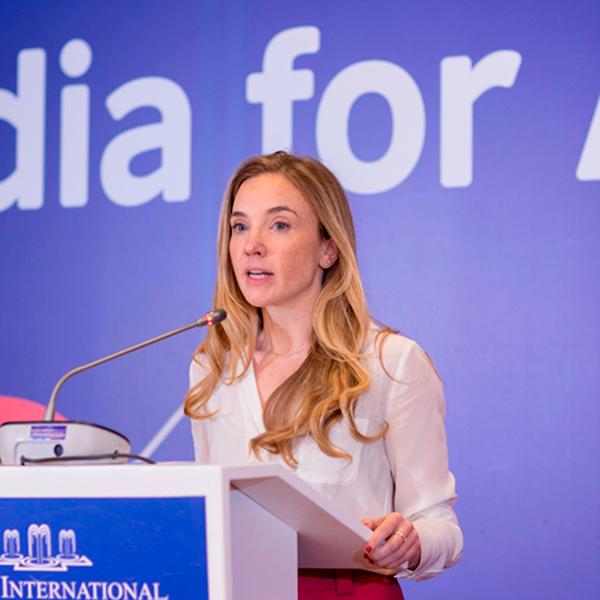
  • Head of Elections and Digital Integrity, Jiore Craig, delivered the keynote address at the British Council’s #MediaForAll conference in Tirana, Albania, this month.
  • ISD analysts feature in NPR, NBC News, BBC, the New York Times, Ireland’s TG4, and more.

Insights No. 49

Four years ago, a terrorist killed 51 people and devastated the lives of many others in an attack on two mosques in Christchurch, New Zealand. We remember and mourn those lost to this and other attacks inspired by right-wing ideology and hate since then. The Christchurch attack represented the result of substantial growth in mainstreamed right-wing extremist ideology globally in the 2010s, from anti-refugee rhetoric in the form of the Great Replacement conspiracy theory, to an emboldened digital extreme right.

The attack prompted greater efforts to combat right-wing extremism globally, especially online. While governments had been focussed on Islamist terrorism since the 2000s, the brutality of this attack served as a wake-up call to take right-wing terrorism seriously. These efforts include the Christchurch Call, where ISD’s CEO, Sasha Havlicek, has sat on its Advisory Network since its inception. We co-lead work to address the algorithmic amplification of content that may lead to violent extremist & terrorist material.

In 2021, ISD’s landmark report on hate speech and extremism on TikTok, Hatescape, found that footage from the Christchurch terrorist’s video of the event was available on TikTok along with material praising the shooter. On the 4th anniversary of the attack, we repeated this research. Within only hours, Senior Analyst Ciaran O’Connor and Head of US Research Melanie Smith found 53 pieces of content featuring support for the terrorist. Their research is available on our website now.

Four years after Christchurch, there is still substantial work to be done to make the world safer from violent extremism, terrorism, and hateful ideologies that seek to divide people and undermine universal human rights.

Also in this newsletter:

  • BBC Panorama research: Misogyny & abuse on Twitter before and after Elon Musk’s takeover
  • Countering pro-Kremlin disinformation targeting Ukrainian refugees in Germany
  • ‘Climate lockdown’ Explainer
  • The ‘Great Reset’ Explainer
  • ISD’s Jennie King on tackling climate disinformation at first-ever European Parliament hearing on topic
  • ISD researchers feature in ABC News, Bloomberg, Euronews Green and the BBC.

Insights No. 48

24 February marked a full year since Russia’s invasion of Ukraine. The conflict has been marked not only by human suffering, but also developments in the landscape of disinformation, hate and extremism. Pro-Kremlin propaganda efforts have relentlessly targeted global populations in an attempt to legitimise the war, using tools ranging from Russian state-backed media outlets, to so-called ‘independent’ journalists touting pro-Kremlin talking points, to bot-based information operations. We have dedicated resources to analysing, understanding and exposing pro-Kremlin information operations since the beginning of the war. Senior Analyst Julia Smirnova’s words here underscore the urgency of continuing to counter Putin’s efforts to undermine democracy and human rights.

Also in this newsletter:

  • How mainstream & ‘alternative’ media news headlines frame climate activism
  • What happens when platforms give up
  • Final two releases from ISD’s 6-part January 6 series
  • ISD researchers feature in Sky News, ARD, Popular Science and Japanese Public Broadcaster NHK.

Insights No. 47

January 6, two years on
Since the insurrection in January 2020, the landscape of extremism has shifted in both the US and abroad. To mark the second anniversary of the Capitol riot, ISD has launched a six-part series exploring notable themes following the attack:

Also in this newsletter:

  • What Biden’s State of the Union means for tech accountability and combatting extremism
  • Migrants and asylum seekers in Ireland at risk as a result of trending TikTok videos
  • Inside the digital labyrinth: Right-wing extremists move to decentralised spaces
  • Friends in the ‘right’ places: An analysis of Elon Musk’s Twitter interactions before and after acquiring the platform
  • Islamophobia versus places of worship: How one community fought back against disinformation

Insights No. 46

ISD and the Climate Action Against Disinformation (CAAD) coalition launched a new flagship report on disinformation and the climate crisis, unpacking the narratives and tactics that emerged from our real-time intelligence unit monitoring around the COP27 summit in November.

Some of the most concerning findings include the re-emergence of climate change denial as a favoured tactic of actors who had until recently sought only to delay climate action. We also found that Twitter had become a haven for climate denial, promoting the hashtag #ClimateScam above other climate-related hashtags with more engagement, for no clear reason.

This publication has been widely reported on, including in TIME, PBS, POLITICO and more.

Also in this newsletter:

  • Jan 6 series: The key to fighting extremism is accountability
  • Spitting out the blackpill: Evaluating how incels present themselves in their own words on the Incel Wiki
  • The ‘groomer’ slur
  • ISD researchers feature in the Irish Times, NPR, Audible, VICE and more

Insights No. 45

The second anniversary of the January 6th insurrection at the Capitol building in Washington, D.C. was marked by ceremonies in the Capitol and White House. The trials of prominent insurrectionists are carrying on, while the nation continues to struggle to reach consensus on the events of the day. To help understand the enduring impact of the events of January 6th, ISD is launching a series of articles, the first of which is an analysis of the mixed fortunes of election deniers globally. Over the coming weeks, you will hear from our US team on topics including the digital footprint of the insurrectionists, the progress of accountability for key actors and the nature of the US’s extremist landscape today.

Also in this newsletter:

  • How January 6 inspired election disinformation around the world
  • Extreme Dialogue: Former conspiracist shares story to help others understand the realities of extremism
  • Profiting from hate: Extremist merchandise found on Redbubble, Etsy, Teespring, Teerepublic and Zazzle
  • Recap of lessons learnt from the 2022 French elections
  • ISD’s report mapping alternative online spaces now available in German
  • Science denial communities turn their attention to RSV, the latest in a predictable trend
  • Takeaways from the 2022 US midterms: election denialist activity and abuse targeting female political figures
  • Wieambilla, Australia, shooting: analysis of perpetrators’ online footprint
  • Online crises responses by social media platforms
  • The effects of algorithmic ranking on online discourse
  • ISD researchers feature in Bloomberg, USA Today, the Washington Post, Grid and more.

ISD US Newsletter #2

Dear friends,

Since 2006 ISD has been at the forefront of analyzing and delivering solutions to weaponized hate, disinformation and extremism around the world. The events of January 6th underscored the urgency of turning the tide on these threats before their impact becomes insurmountable. In 2020, ISD broke new ground working with US partners to safeguard the elections. Last year, we took the decision to significantly scale up ISD-US, establishing a real-time extremism and disinformation threat monitoring and response capability in the lead up to the midterms.

It is fitting, on the anniversary of the January 6th insurrection, that today we are welcoming C. Dixon Osburn as our new Executive Director for ISD-US. Dixon brings three decades of policy entrepreneurship and leadership experience to the position from his work at the intersection of national security, human rights and democracy. His experience runs from leading the successful bi-partisan effort to repeal “Don’t Ask, Don’t Tell”, the military’s ban on LGB servicemembers; to spearheading campaigns to end counter-terrorism policies that violate the rule of law at Human Rights First; and leading the efforts of the Center for Justice and Accountability to hold accountable war criminals across the globe. Dixon’s lifelong commitment to justice and democracy reflects ISD’s deep commitment to human rights based approaches to national security. Dixon will lead our growing US team as we go into the 2024 election season, and you can hear from him about his background and plans below.

Beginning shortly, ISD will be publishing a series of analyses examining our data around the midterm elections, the ongoing impact of extremism and disinformation, and the evolution of the threat landscape two years on from the January 6th insurrection. This newsletter is a snapshot of recent ISD-US highlights across our areas of work, and provides an insight into the incredible people we’ve brought on board to help turn the tide.

We couldn’t do this work without our friends and partners. With immense gratitude, from all of us here at ISD, we wish you a happy, peaceful and productive New Year and look forward to working with you on our common cause in 2023!

Sasha Havlicek, CEO