For 20 years, ISD has delivered field-leading threat detection, analysis and real-world strategies to combat terrorism, extremism and authoritarianism - in all their ideological forms.

Home / Insights / Page 8

ISD NEWSLETTERS

ISD Insights is our monthly newsletter which delivers all the latest research and analysis directly to your inbox. To sign up for Insights, please complete the form below.

Insights No. 63

February marked two years since Russia’s full-scale invasion of Ukraine and the onset of an accompanying information war. In our report “Two Years On“, ISD analyses the evolution of Russian state and pro-Kremlin propaganda aimed at eroding international support for Ukraine. Drawing on two years of ISD research, we expose tactics used by pro-Kremlin actors and outlets to maintain influence despite EU sanctions: from disguised spin-off outlets, to coordinated networks, to single-purpose accounts with fake personas.

We also highlight critical vulnerabilities within the West that these actors are poised to exploit, namely: grievances around the cost of support for Ukraine; a potential rise in isolationism in US foreign policy in the event of a Trump win in the Presidential elections; the expected gains of pro-Kremlin far-right parties in the upcoming European parliamentary elections; and accusations of hypocrisy levelled at Western governments regarding international conflicts, especially the ongoing Israel-Hamas conflict.

As we reflect on this pivotal moment, we recognise the urgent need for united action by Western governments to decisively tip the military balance and support Ukraine’s fight against Russian forces.

Also in this newsletter:

  • Chance or cultivation? Farmers’ protests in Germany and connections to the far right
  • Recent Oversight Board rulings reveal that Meta continuously fails its users
  • Unraveling tragedy: The power of US anti-government extremism in the case of Justin Mohn
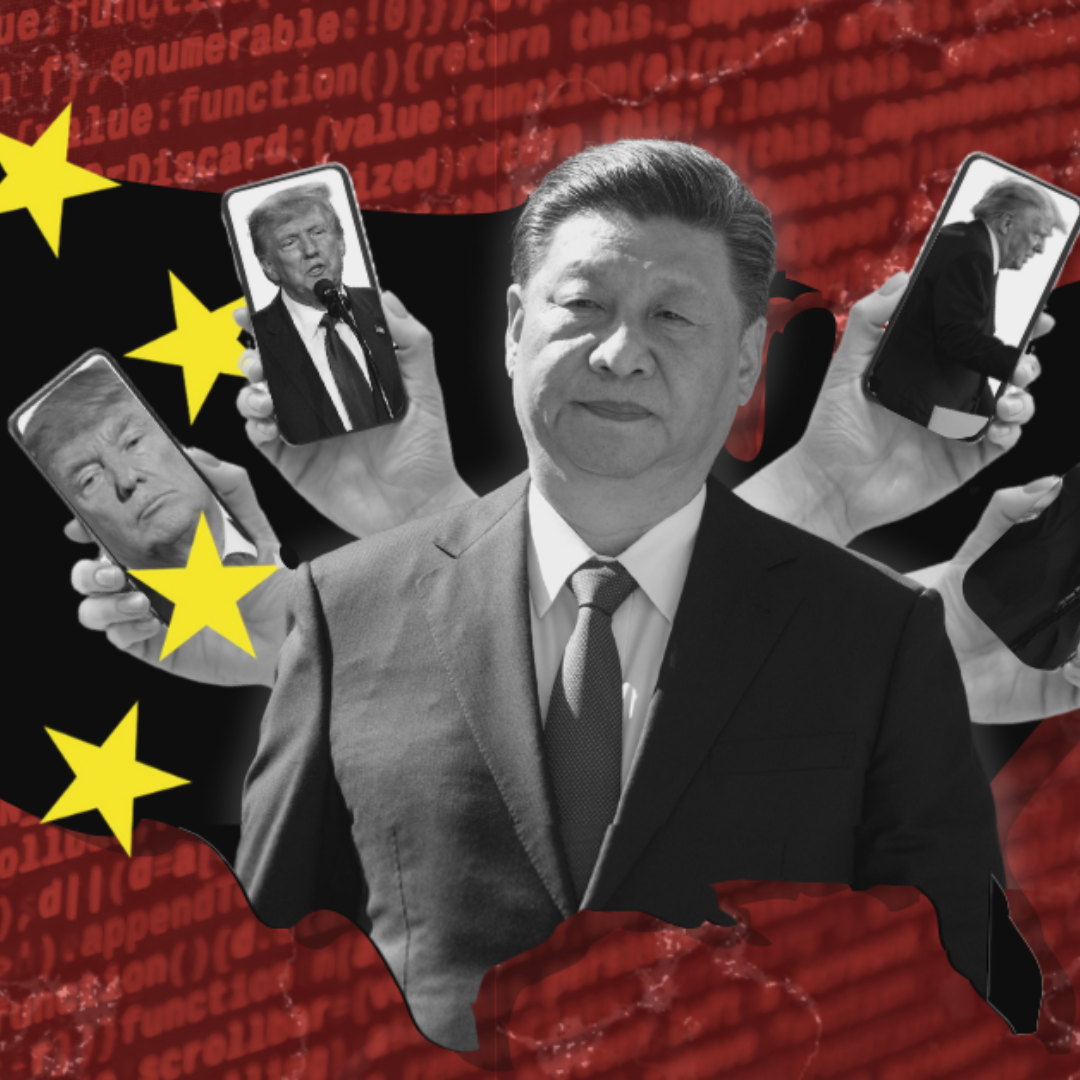
  • Pro-CCP ‘Spamouflage’ network pivots focus on US Presidential Election
  • Explainers: Neo-confederate ideology
  • Our analysts and research featured in the New York Times, the Washington Post, Euronews, USA Today, and more.

Insights No. 62

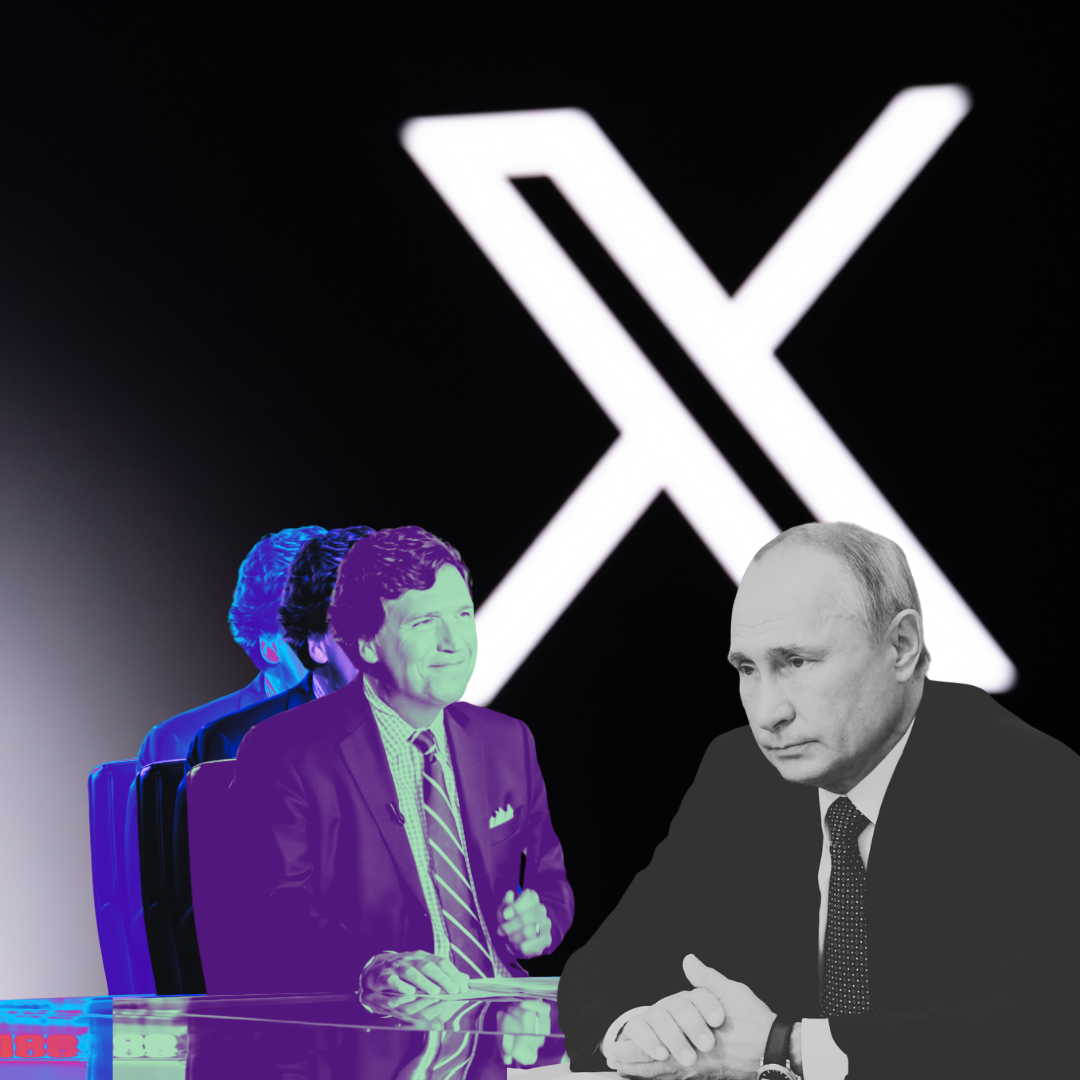
Former Fox News anchor – and Russian state media favourite – Tucker Carlson travelled to Russia in early February where he announced he would be interviewing President Vladimir Putin, just two weeks ahead of the second anniversary of Russia’s invasion into Ukraine. Elon Musk, whose platform X has become a home for actors who have been deplatformed elsewhere, agreed to air the interview.

ISD OSINT analyst Elise Thomas has long studied Russian influence campaigns and has observed how Carlson’s divisive rhetoric and conspiratorial tendencies have found a receptive audience in pro-Kremlin media circles. Read her analysis on Russian state media’s fascination with Carlson here.

Also in this newsletter

  • A rematch for the fate of US democracy?
  • Why the US urgently needs child online safety legislation
  • Children exposed to mass shooter glorification across mainstream social media platforms
  • How the Israel-Hamas War is influencing pro-Kremlin propaganda about Ukraine
  • Germans who go to social media for their news are more susceptible to pro-Kremlin disinformation
  • Coalition to Counter Online Antisemitism compendium on Holocaust denial and distortion
  • Networks of dissuasion: Mapping online attacks on reproductive rights in France
  • Explainers: ‘Saints’ culture
  • Our staff featured in USA Today, NPR’s All Things Considered, the Daily Beast’s the New Abnormal, the Hill and more

Insights No. 61

In January, the British government announced that it would be proscribing the Islamist group Hizb ut-Tahrir as a terrorist organisation. The latest ISD Explainer lays out the context for this proscription, as well as the origins and beliefs of Hizb ut-Tahrir.

Also in this newsletter:

  • Is ‘swatting’ the latest trend in political violence? Not so fast
  • The terrorist radio revival: How the Islamic State’s radio station survives on social media
  • Mapping online attacks on reproductive rights in France
  • A web of hate: Looking at online gendered abuse in 2022 in the US
  • 2022 World Cup in Qatar: Anti-feminist discourses by the German-speaking far-right on Telegram
  • In the blind spot: Right-wing extremists on alternative and established platforms
  • Israel-Hamas conflict research analysis
    • What a ChatGPT campaign targeting pro-Ukraine Americans tells us about the future of generative AI
    • Pro-CCP network known as ‘Spamouflage’ weaponises Gaza conflict to spread anti-US sentiment
    • Antisemitic riots in Russia: How misinformation spread online fueled violence
    • Unpacking antisemitic narratives about the Hamas attack and the Israel-Hamas Conflict within YouTube comments
    • Changing attitudes towards Ukraine: A cross-language examination on Facebook and X
    • Cross-ideological antisemitism and the October 7th attacks
    • 43-fold increase in anti-Muslim YouTube comments following Hamas’ October 7 attack
  • Explainers: Hizb ut-Tahrir, Northern Ireland Related Terrorism
  • In this issue, our staff features in ZDF, the BBC, NBC News, the New York Times and more.

Insights No. 60

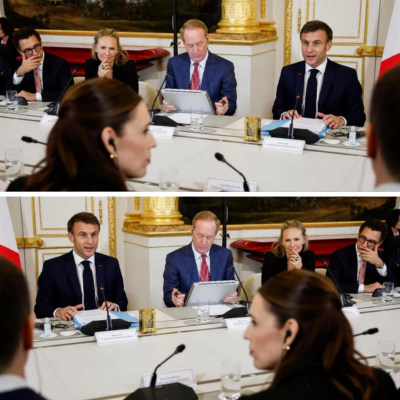
ISD CEO Sasha Havlicek was honoured to speak at the annual Christchurch Call Leaders’ Summit in November, chaired by President Emmanuel Macron and Rt Hon Dame Jacinda Ardern, former Prime Minister of New Zealand.

The Leaders’ Summit, held on the margins of the 2023 Paris Peace Forum in Paris, brought together leaders from government, the tech sector, partner organisations, and civil society held at the Élysée Palace in Paris. Experts convened to cover a range of topics related to terrorism and violent extremist content online, including emerging technologies and AI, algorithmic transparency and the Israel-Gaza conflict, among others.

The summit built on ISD’s participation across a range of working groups which saw ISD produce a policy paper with partners on misogyny, extremism and online gender-based violence. This paper was referenced in the summit’s joint leaders’ statement.

ISD is a proud member of the Christchurch Call’s Advisory Network. Read more about what the Christchurch Call has accomplished over the years here.

Also in this newsletter:

  • Resurrecting the legacy of Osama bin Laden: Algorithms and ambivalence
  • An investigation into the online mis- and disinformation ecosystem in Ireland
  • How wellness and new age influencers are serving anti-climate narratives to their audiences
  • #HamasisISIS?: Assessing the campaign comparing proscribed groups
  • Information disorder in the Israel-Hamas war highlights shifts in the fight against online misinformation
  • Analysing reactions to the Israel-Hamas conflict
  • The #Stolzmonat, a German-language, far-right countercampaign against Pride month
  • Explainer: Islamophobia/anti-Muslim hatred
  • In November, ISD announced our future cooperation with the Alfred Landecker Foundation as the main supporter of ISD’s international Digital Policy Lab
  • Our staff features in the New York Times, CBS’ Face the Nation, AP News, USA Today and more.

Insights No. 59

In response to the terrorist attacks carried out in Israel on the 7th October and the ensuing war between Israel and Hamas, ISD’s threat monitoring and research teams have worked at pace to evidence and analyse the global repercussions of the exponential spread of targeted hatestate actor information operations as well as terrorist and violent extremist mobilisation online. From hate and extremist groups to authoritarian states, our work has shown how these actors are seeking to exploit the devastating developments in the Middle East to further their agendas, divide communities and contribute to a cycle of recruitment and violence. Even with age restrictions in place, ISD has found that children are being served graphic and violent content across various platforms.

Our threat prevention teams are working around the clock to mitigate credible threats of targeted, hate-based violence against communities. Our platform accountability policy teams are working to ensure  platform and legislative commitments are enforced around the information crisis that has emerged, and Strong Cities Network members are working to share and scale practical approaches to preventing a further uptick in polarisation and violence.

We will be continuing to devote substantial resources to these efforts over the forthcoming weeks. Support our work here.

Also in this newsletter:

  • Violent and graphic content of the Israel-Hamas conflict served to minors’ accounts
  • Illegal, violent terrorist content relating to Hamas-Israel conflict reaches millions on X
  • Rise in antisemitism on mainstream and fringe social media platforms following Hamas’ terrorist attack
  • Use of words, phrases and hashtags associated with anti-Muslim mobilisation surges amid Israel-Gaza conflict
  • Capitalising on crisis: Russia, China and Iran use X to exploit Israel-Hamas information chaos
  • Active Clubs: The growing threat of ‘white nationalism 3.0’ across the United States
  • What a failing propaganda campaign tells us about pro-Kremlin influence operations in 2023
  • CEO Sasha Havlicek and US Executive Director Dixon Osburn led ISD’s team at the Eradicate Hate Global Summit in Pittsburgh
  • Our staff features in the New York Times, Le Figaro, POLITICO, Newtral, NPR and more.

Insights No. 58

In September, ISD hosted our flagship Digital Policy Summit 2023, where high-level representatives from North America, Europe and the Pacific gathered in Berlin to discuss topics including implementation and enforcement of existing and new digital regulatory frameworks (e.g. the European Digital Services Act, the UK’s Online Safety Bill and Australia’s Online Safety Act). There were also important discussions chaired by CEO Sasha Havlicek and Executive Director Germany, Huberta von Voss, that built on DPL Working Group papers and recommendations, including the two papers launched at the event on online gender-based violence (OGBV) and the threats and policy implications posed by emerging platforms and technologies.

On the margins of the UN General Assembly, Executive Director Eric Rosand and team helped deliver the Strong Cities Network’s Fourth Global Summit held in New York. Attended by over 100 mayors and many other city leaders, this summit provides a unique forum for ideas exchange and thought leadership between those who are uniquely positioned to engage on preventing and tackling rising levels of hate, extremism and democratic backsliding. Just ahead of the summit Strong Cities launched two new practical tools for cities – A Guide for Mayors and A Guide for Cities to help them prevent and respond to hate, extremism and polarisation.

This week, the team led by Sasha and US Executive Director Dixon Osburn, are presenting at the Eradicate Hate Global Summit in Pittsburgh. Sasha joined the panel of the opening session ‘The State of Hate’ on Wednesday where she spoke on the impact of hate and extremism. “We’ve talked about the problems of violence, but the problem is a much bigger one. It is impacting civil discourse, it is impacting our opportunity to live in cohesive societies. Liberal democracy is on the line,” she said. We also had the opportunity to co-chair the working group on gaming, where we sought to establish a framework with industry, civil society and academia to use gaming as a vector for positive change to counter hate and extremism. The full agenda is available here and recordings from the Summit will be made available.

Also in this newsletter:

  • Meming 9/11: A new generation of Salafi-jihadists terrorposting the September 11 attacks
  • Misogynistic pathways to radicalisation
  • Emerging platforms and technologies: An overview of the current threat landscape and its policy implications
  • Policy approaches to addressing data access challenges
  • Explainer: Gen Z Salafism
  • Explainer: Rumble
  • ISD is now on Instagram!
  • ISD’s mini series for the Global Network on Extremism and Technology (GNET)
  • ISD features in the BBC, Sky News, Bloomberg, the NYT and more.

Insights No. 57

ISD’s new report ‘Young guns’ explores and explains the latest trends in radicalisation and extremism among young people. Traditional extremist ideologies like white supremacy and Salafi-jihadism continue to attract young recruits in the US. Alongside this, though, a much broader set of ideologically fluid extremist and extremist-adjacent movements are competing for young followers online.

Also in this newsletter:

  • Content glorifying the Wagner Group circulating on Meta platforms
  • Cashing in on conflict: TikTok profits from pro-Kremlin disinformation ads
  • Summary of the Oct 2022 expert conference for the “Countering radicalisation in right-wing extremist online subcultures” project.
  • Explainer: The ‘public health approach’ to prevention
  • Explainer: Rumble
  • Fourth and final video for ISD’s video campaign #wirstattDesinformation, a campaign that aimed to foster empathy with lived experiences of Ukrainian refugees by pre-bunking false and manipulated content targeting refugees living in Germany.
  • ISD features in Wired, CNN, Euronews, NPR and more.

Insights No. 56

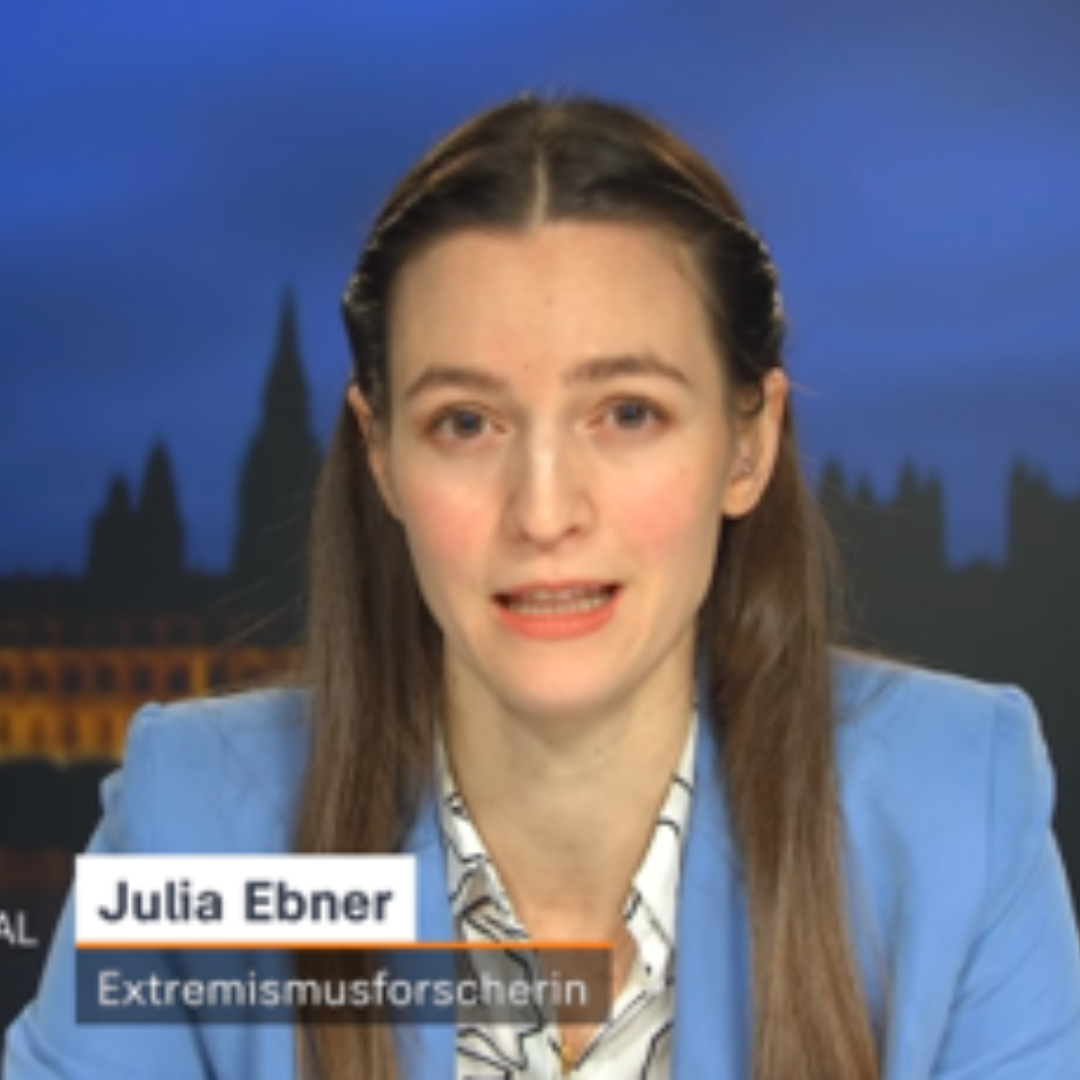
ISD’s Senior Resident Research Fellow Julia Ebner gives an exclusive interview with The Times about her pioneering undercover research career, the threats and challenges she’s faced in her line of work, and her latest book on the mainstreaming of extremist ideologies.

The full interview is available at The Times.

Julia also wrote an op-ed for The Guardian on how conspiracy thinking has seeped into the mainstream and what Western democracies can do to push back.

Her latest book ‘Going Mainstream. How extremists are taking over’ is available for purchase online.

Also in this newsletter:

  • Now available in Spanish: Distrust, fear and hate, the drivers of Spain’s 23J campaign
  • Explainer: Moorish sovereign citizen
  • US Senate committee uses ISD analysis for support on its review of Intelligence failures in the lead up to Jan 6
  • ISD features in NBC News, 20 Minutes, the New York Times and the Forward

Insights No. 55

The UK’s efforts to keep the British public safe from online harms will be stymied if the Online Safety Bill fails to mandate platform data access for independent researchers, says ISD CEO Sasha Havlicek in a new op-ed. Read it here.

Also in this newsletter:

  • New ISD job opportunities!
  • Distrust, fear and hate: The drivers of Spain’s 23J campaign
  • Twitter used to be where news breaks. Now Twitter’s newsroom is broken.
  • Another bite of the Kremlin apple: A Russian new state media spin-off targets the German public
  • Gore and violent extremism: How extremist groups exploit ‘gore’ sites to view and share terrorist material
  • Explainers: Data Access, Transparency, Far-left antisemitism
  • ISD’s Jennie King delivers a Covering Climate Now press briefing on the shifting climate mis- and disinformation landscape, leading a focus group discussion as a keynote speaker for Earth Journalism Network, and participating as a panellist for a EU Disinfo Lab webinar.
  • ISD features in the Guardian, Deutsche Welle, El País and the Washington Post

Insights No. 54

Last month (June) the European Commission’s Coordinator on combating antisemitism, Katharina von Schnurbein, wrote an open letter to Twitter’s leadership calling for greater action against antisemitism on the platform, referencing ISD and CASM Technology’s research which showed such content had more than doubled since Elon Musk’s takeover. Co-signed by around twenty national antisemitism coordinators from across Europe and beyond, the letter makes an urgent call for greater transparency from the platform around content moderation, legal compliance and the algorithmic amplification of harmful content. Despite calls for more transparency, ISD remains concerned that movement on this front is moving in the wrong direction, with limited cooperation from tech companies, and shrinking data access for researchers across Twitter and other social media platforms.

Also in this newsletter:

  • A Year of Hate: Understanding Threats and Harassment Targeting Drag Shows and the LGBTQ+ Community (Executive Summary, and country profiles on the US and UK)
  • CaliphateTok: Islamic State propaganda on TikTok
  • Explainer: Hindutva
  • Explainer: Commercial disinformation
  • A field guide for assessing chances of online-to-offline mobilisation
  • ISD at a ‘side event’ of the United Nations 2023 Counter-Terrorism Week, co-hosted by the World Jewish Congress and Israel.
  • Our researchers feature in the Guardian, ABC, VICE News, the Narwhal, the Washington Post, Charlie Hebdo and more.