Digital Dispatches
September 9, 2025
ISD-US
Information Warfare and Online Manipulation, Targeted Threats, Hate and Abuse, Tech Legislation and Regulation
Out of the woodwork: Examining the global aspirations of The Base
In July 2024, the European Union added the neo-Nazi accelerationist group ‘The Base’ to its Terrorist List, sanctioning the organization across all EU member states. The move may have surprised counter-extremism practitioners, as The Base appeared to have been effectively dormant following a major international crackdown between 2019 and 2021 that led to the arrest of numerous members across the US and Europe. However, since at least 2023, The Base has been steadily rebuilding, recruiting new members worldwide, conducting paramilitary-style training and acts of sabotage, and even plotting mass casualty attacks.
This Dispatch analyzes The Base’s early history and recent re-emergence, examining its activities in Europe and North America along with their newly launched insurgency against the Ukrainian government. The article also explores The Base’s diverse tactics, including the use of inauthentic social media accounts and offering cryptocurrency payments to prospective attackers—methods that are highly unusual among violent neo-Nazi groups and suggest the possibility of covert Russian support for the group. The Base’s complex dynamics require a multifaceted counter-terrorism approach that integrates consideration of potential state sponsorship with a comprehensive understanding of their tactics. Ultimately, a cohesive international effort is needed to effectively investigate and disrupt this evolving threat.
History of The Base: 2018 to 2021
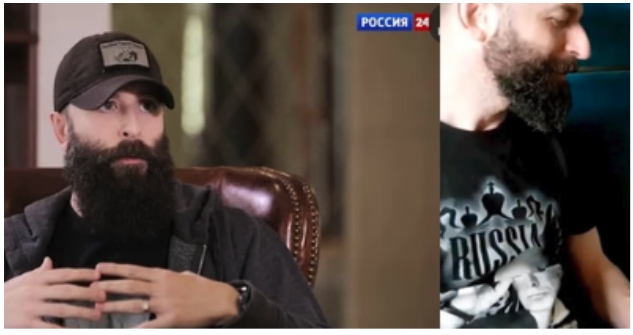
The Base was launched in the summer of 2018 by Rinaldo Nazzaro, a US citizen based in Russia. The group’s ideology and methodology are inspired by an influential compendium of essays known as Siege, which spawned a global movement of neo-Nazi accelerationists that has been active since at least 2015. Proponents of Siege, including members of The Base, advocate for violence, sabotage and terrorism to hasten the collapse of modern society and establish a white supremacist ethnostate. While many Siege-inspired groups such as the Terrorgram Collective have focused on producing digital propaganda and inciting violence, The Base stands apart by prioritizing offline organizing and paramilitary-style training in preparation for an anticipated race war.
The Base employs a decentralized, cell-based organizational model that draws on a strategy known as ‘leaderless resistance,’ allowing small, localized teams to operate under the group’s banner while maintaining some degree of autonomy. This structure of semi-independent cells is meant to mitigate the risk of disruption—in theory, if one cell were to be neutralized by law enforcement, it would not necessarily interrupt the activities of other cells.
Although The Base is often described as an “American” or “US-based” group, this characterization is somewhat misleading. While its early efforts focused on establishing a white homeland in the Pacific Northwest and several of its most notorious plots originated in the US, the group has always operated globally. Nazzaro, The Base’s leader, has resided in Russia during the entirety of the group’s existence and continues to fundraise and provide strategic direction to the group from Russia. Since its inception, members have been active across Australia, Europe and North America, and numerous jurisdictions—including Australia, Canada, the EU, New Zealand and the UK— have designated the group as a terrorist entity.
Between 2019 and 2021, The Base gained widespread attention following a series of high-profile incidents and arrests. In one notable case in 2019, Base members helped smuggle and hide a Canadian Armed Forces reservist and fellow member of the group across the US-Canada border. They subsequently built a machine gun and contemplated numerous acts of violence and sabotage, including a mass shooting, train derailment, power grid destruction, and water supply poisoning. In another instance, members conspired to murder an antifascist couple in the state of Georgia. These individuals, along with numerous other members involved in criminal activities across the US and Europe, were eventually arrested, resulting in a marked decline in the group’s activities by 2021.
Resurgence: 2023 to present
The disruption of The Base by 2021 proved to be a temporary setback. The organization has remained resilient—partly due to its enduring neo-Nazi accelerationist ideology, which still thrives in digital spaces, and partly because Nazzaro can continue to lead the group from Russia, which appears to act as a safe haven for his activities. Based on public reporting and online monitoring, ISD believes The Base has operated in at least 18 countries since November 2023: Belgium, Bulgaria, Croatia, Denmark, France, Germany, Italy, Lithuania, Poland, the Netherlands, Romania, Russia, Serbia, Spain, Sweden, Ukraine, the UK and the US.
While it is unclear when The Base began regrouping, an early indication of its re-emergence came in November 2023, when Europol helped coordinate the arrest of five Base members and the interrogation of seven others across six European countries. Additional arrests occurred the following year—in August 2024, three Base members (including a 16-year-old male) were arrested in the Netherlands for allegedly trying to incite terrorist attacks in online chat groups. The next month, two individuals tied to The Base were arrested in Italy for a slew of crimes including advocating for violence and extorting minors into producing child sexual abuse material (CSAM), highlighting the growing overlap between violent extremism and online abuse networks. The pair were also reportedly involved with an obscure neo-Nazi accelerationist group based in Russia known as AAST, which promotes an occult network called the Order of Nine Angles and glorifies violence against Ukraine. The arrests have continued into 2025—in February, a 15-year-old member of The Base was arrested for allegedly plotting to attack synagogues in the UK.
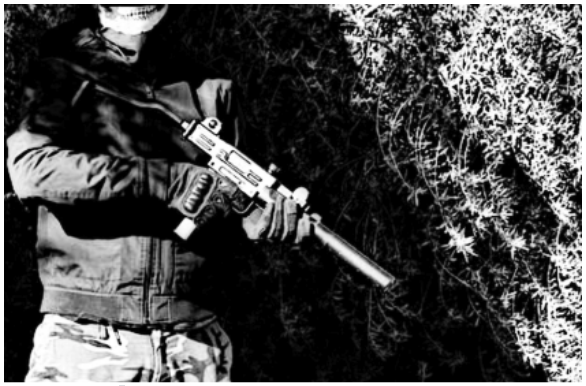
In addition to its resurgence in Europe, The Base has also re-established a small but growing presence in the US. According to reporting from The Guardian, in the summer of 2024, Nazzaro initiated the recruitment process for a new US-based leader, offering to pay them a monthly salary. Later that year, The Base posted a video on Telegram denouncing American democracy and celebrating the arson of a ballot box in the Pacific Northwest. Throughout 2025, The Base has posted numerous images on social media featuring members spread across three regions of the US, most of whom are shown carrying firearms and wearing tactical gear. In May, The Base solicited cryptocurrency donations to support a “national training exercise” for its American members. While most of The Base’s recent activities have occurred in Europe, the presence of armed members in the US poses a credible risk of violence, and Nazzaro has stated as recently as June 2025 that he remains “openly adversarial” towards the US government and that he hopes for its demise.
The Base in Ukraine: Operation White Phoenix
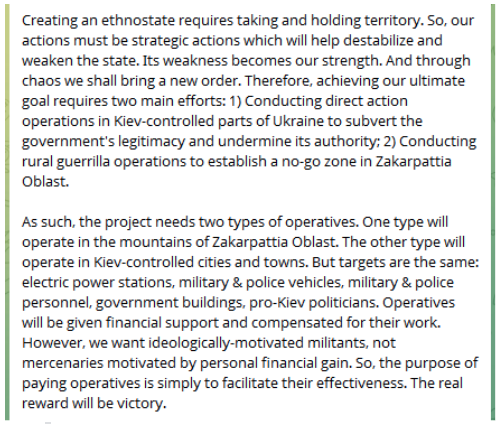
While The Base maintains a broad presence across Europe and North America, Ukraine has recently emerged as the focus of its activities. In March, individuals operating under the auspices of The Base launched “Operation White Phoenix,” a campaign to establish a white ethnostate in the Carpathian Mountains of Ukraine by “any means necessary.” They followed this announcement by calling for actions to undermine the Ukrainian government and create chaos across the country, including the destruction of critical infrastructure, attacks on government offices, and assaults on Ukrainian security personnel and politicians.
The origin of this project was partially revealed in a June podcast interview featuring Nazzaro, wherein he claimed that he had given his blessing to several Ukraine-based individuals who sought to use The Base’s resources and branding in pursuit of this mission. After conducting a “terrain analysis,” Nazzaro determined that the Carpathian Mountains offered ideal territory to establish a white homeland due to its rugged landscape and strategic position bordering multiple EU countries, which would allow for “facilitation routes” for foreign fighters. While Nazzaro claims that he only provides strategic guidance and financial support to Base members in Ukraine who otherwise operate autonomously, the true degree of his coordination with these and other global operatives is unclear and merits further investigation.
As a show of force, in late March of this year, The Base posted footage of the White Phoenix logo being spray painted in over 100 sites across Ukraine, including but not limited to areas in Lviv, Kyiv, Odessa and Kharkiv. The group has also posted numerous first-person videos showing ostensible members conducting acts of arson and sabotage. Between April and July 2025, The Base shared footage of 11 arson attacks targeting electrical boxes, military or police vehicles, and buildings, several of which appear to be government offices.
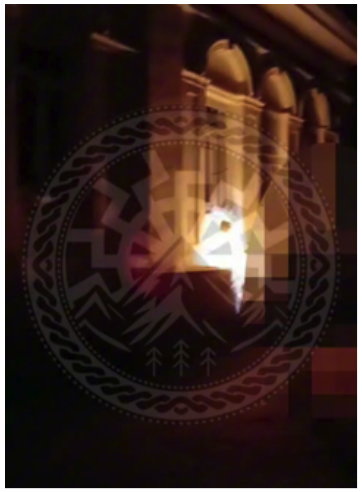
In mid-June 2025, White Phoenix operatives made headlines after claiming responsibility online for the assassination of Ivan Voronych, a senior Intelligence Officer at the Security Service of Ukraine (SBU). They also posted a peculiar message about Voronych, revealing extensive knowledge about his personal life and career, including his birthplace and racial ancestry, as well as specific details about assignments he had taken as an Intelligence Officer, and locations to which he had been posted for the SBU. However, details around the assassination remain murky. Ukrainian intelligence officials later reported that they had killed the alleged hitmen, who they claimed were Azerbaijani nationals hired by the Federal Security Service (FSB) of Russia to conduct the assassination.
While it is uncertain whether The Base truly played a role in murdering Voronych or if they falsely claimed credit to provoke fear and boost their image, the blurred lines between terrorist activity and possible FSB involvement raise questions about potential Russian sponsorship of the group. The circumstances around the assassination are among several unusual indicators that distinguish The Base’s activities from other neo-Nazi accelerationist groups, meriting further investigation as to whether they are receiving covert state support.
Assessing the possibility of Russian State support for The Base
While there is no concrete evidence proving Russian state support for The Base, experts have raised suspicions about their potential involvement for years. This section will explore some of the factors that have contributed to these concerns and examine how The Base’s recent activities in Ukraine suggest that the group may not be an entirely grassroots operation. While it is impossible to definitively link The Base’s activities to Russia using available information, there are numerous indicators of potential state sponsorship that merit further investigation.
The first clue to unravelling the complexities surrounding The Base concerns Nazzaro himself, whose career background would make him a prime candidate for recruitment, intimidation, or other form of exploitation by the Russian intelligence services. By his own admission, prior to moving to Russia, Nazzaro spent 17 years working in the US intelligence community, including as an FBI Intelligence Analyst and civilian analyst supporting US military operations in Afghanistan and Iraq. Numerous details about his career have been corroborated in public reporting, which reveal that he held a Top Secret security clearance during his time with the US government. Even setting aside his years-long leadership of a transnational terrorist organization, this profile alone raises questions about whether the Russian government would seek to exploit his access and capabilities by recruiting him as an intelligence asset.
Another factor that raises suspicion is the fact that The Base’s operations in Ukraine align conveniently with Russia’s geopolitical goals. While The Base’s Ukrainian cell publicly distances itself from Russia and occasionally criticizes the country’s aggression against Ukraine, its primary target is the Ukrainian government and security apparatus. Base operatives have been particularly vociferous in stoking resentment over conscription in Ukraine and have encouraged and celebrated attacks against employees working in Ukraine’s Territorial Recruitment Offices. At a minimum, The Base’s activities may divert Ukraine’s attention away from countering Russian aggression. More nefariously, The Base could be part of Russia’s hybrid warfare tactics, which employ a mixture of conventional military forces, clandestine operatives and unwitting agents to sow chaos.
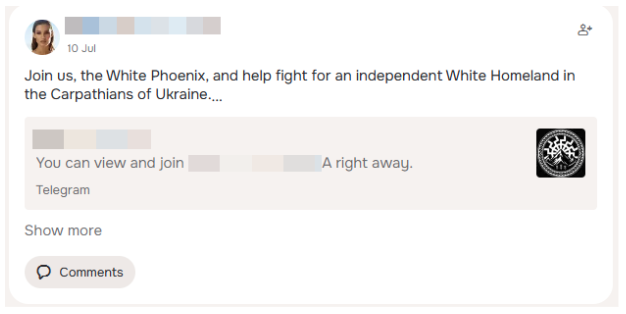
The Base’s social media activity also raises suspicions of possible state support. The organization relies on seemingly coordinated and inauthentic activity across numerous social media platforms, many of which are based in Russia, to spread their message and bolster recruitment. While The Base also uses widely popular international platforms such as Telegram, Instagram and TikTok, it heavily leverages Russian applications including VKontakte, RuTube, Mail.Ru, and the social network Odnoklassniki.
On many of these platforms, The Base appears to use inauthentic accounts such as bots or purchased accounts to increase their reach. When the original White Phoenix channel launched on Telegram in March, it struggled to amass more than 100 subscribers. However, after the channel was swiftly taken down by Telegram, The Base appeared to have anticipated the disruption, advertising a backup channel that had managed to accrue nearly 45,000 subscribers within a few weeks of operation. This level of subscribership in such a short period of time is unheard of among neo-Nazi accelerationist channels. In some cases, the configuration of the accounts is crude, with ostensible Base recruiters on social media using generic English-language names, profile pictures that appear to be inauthentic or artificially generated, and profiles that are insufficiently backstopped or poorly disguised – for example, in many cases, suspected fake accounts had fewer than 10 friends or followers. It is unclear whether The Base created their own network of inauthentic accounts or have instead leveraged bot farms which are a well-established feature of Russia’s information operations toolkit.
A final indicator of potential state sponsorship of The Base is its offering of cryptocurrency payment to individuals in Ukraine who are willing to conduct acts of sabotage and violence, which implies a level of financing that is unusual for neo-Nazi accelerationist groups and raises questions about where the funding originates. The Base regularly offers compensation to participants in its mission in Ukraine and promotes the use of the cryptocurrency exchange Kraken for this purpose. This use of cryptocurrency rewards is a well-established part of Russia’s playbook in Europe, where intelligence services offer payment to prospective operatives—many of whom are not aware of the Russian state’s involvement—to conduct acts of sabotage. One example among dozens can be found in the case of three men in the UK who were convicted in July of committing arson on behalf of Russia’s Wagner Group. In this case, two of these individuals had no knowledge of Russia’s involvement, and at least one of the men was offered cryptocurrency in exchange for their exploits.
While attributing certain activities of an ostensible non-state actor such as The Base to Russia is challenging and there is no “smoking gun” that proves Russian involvement, there are numerous indicators that call into question whether The Base is a fully grassroots operation. However, even if the Russian government is covertly supporting The Base, this does not necessarily imply total Russian control over all of The Base’s operations abroad. Even in Ukraine, where indicators of potential Russian involvement in The Base are most prevalent, it is possible that certain members are acting unwittingly on behalf of Russia and that they operate somewhat autonomously while still receiving logistical or financial support from the Russian government. Crucially, there exists a wide range of ways in which Russia could be supporting The Base. A thorough investigation into the extent and nature of Russian involvement in The Base—if they are involved at all—is therefore critical for developing a clear assessment of the threat posed by this group.
Conclusion
The early disruption and subsequent resurgence of The Base highlights the transience of neo-Nazi accelerationist networks, their ability to adapt, and the enduring influence of Siege ideology, which continues to inspire violence worldwide. While sustained pressure on these groups remains vital, potential state support for The Base adds a dimension of complexity which requires a multifaceted and internationally coordinated approach. In particular, policy responses to the threat must recognize the potential overlap between violent extremism and hostile state activity, which often integrates hybrid tactics such as influence operations and the manipulation of online platforms to advance certain geopolitical goals. In the case of The Base, while counter-terrorism tools such as proscription may unlock valuable powers to address the threat, international stakeholders must also consider a broader range of coordinated responses. These can include the disruption of digital networks and implementation of economic measures such as sanctions.
While The Base’s activities must be examined with a cautious and critical eye, the threat they pose must be taken seriously, as they have a proven commitment to violence. To combat The Base effectively, practitioners and policymakers must develop a comprehensive understanding of their activities that clarifies the nature and scale of both grassroots support for the group and possible state sponsorship. At the same time, regardless of state involvement, it is critical that global stakeholders remain diligent in countering militant accelerationist networks, which persist in fomenting violence worldwide despite fading in and out of obscurity.