Digital Dispatches
October 31, 2025
ISD UK
Accountability and Speech Protection, Democratic Integrity
Irish Presidential Election 2025: Renewed attacks on election integrity and repeated platform failures
By: Institute for Strategic Dialogue (ISD) and Hope and Courage Collective
31 October 2025
Introduction
A joint investigation by the Institute for Strategic Dialogue (ISD) and Hope and Courage Collective (H&CC) documented and analysed 172 instances of political mis- and disinformation published on X, TikTok, Facebook and YouTube in the six weeks leading up to polling day in the Irish presidential election on 24 October 2025.
Analysis identified many false, misleading and delegitimising narratives about both the electoral process and candidates. This included claims that sought to invalidate the nomination process, undermine the validity of the election, and interfere with voting on polling day. We also found evidence of smears, harassment and the use of generative AI (genAI) to create misleading or derogatory images targeting candidates.
Researchers grouped these narratives into three broad categories: 1) threats to electoral integrity during the campaign; 2) threats to electoral integrity during polling day; and 3) threats to electoral integrity targeting candidates. The narratives and incidents analysed in demonstrate efforts to undermine confidence and erode trust in Ireland’s democratic processes. These narratives were amplified through social media recommender systems that reward outrage, while social media platforms failed to enforce moderation guidelines designed to protect electoral integrity. This allowed anti-democratic rhetoric to reach large audiences quickly.
Ultimately, the findings of this report underline the need for stronger coordination between platforms and regulators in safeguarding electoral integrity. Implementation of measures such as the EU’s Democracy Shield, along with the activation of Part 5 of the Electoral Reform Act, would provide essential tools for countering manipulation and keeping Ireland’s elections free from manipulation and interference.
Key Findings
Over the course of this analysis, researchers found that:
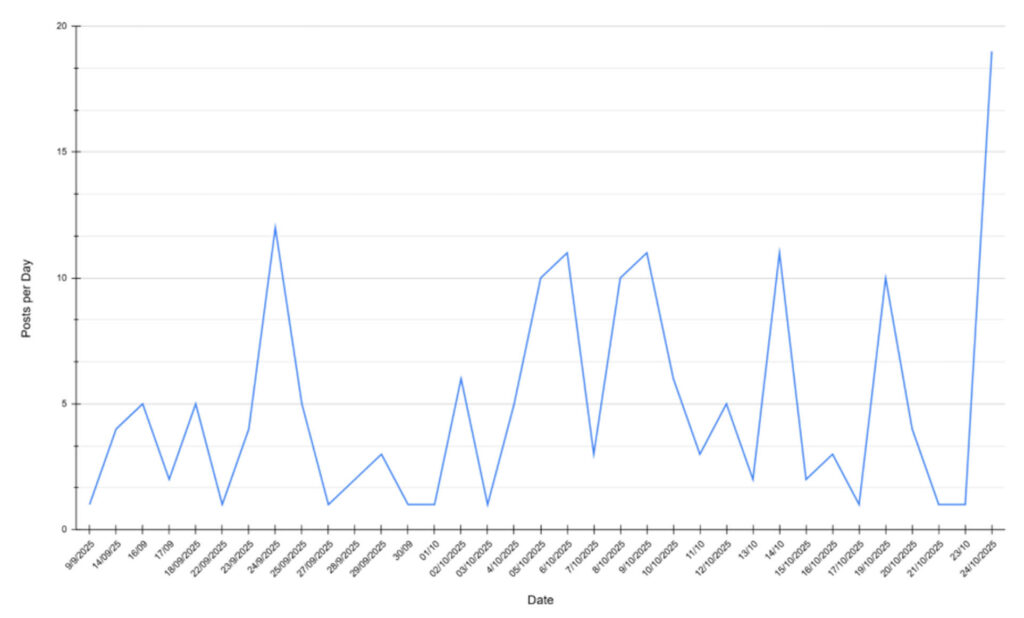
- Online posts featuring threats to electoral integrity peaked on two dates: 24 September, the day nominations closed; and 24 October, polling day.
- Threats to electoral integrity were most commonly found on X, followed by Facebook, TikTok and YouTube.
- Candidates faced a slew of derogatory, unsubstantiated and personal attacks throughout the campaign, including in genAI content, with little proactive intervention from platforms.
- A ‘spoil the vote’ campaign was bolstered by over 10,000 mentions across social media in the four weeks leading up to polling day. Though this is a legitimate democratic exercise, researchers found that it facilitated the spread of election disinformation and anti-migrant and anti-LGBTQ+ hate.
- Separate from the analysis of 172 instances of political mis- and disinformation, researchers identified 43 election-related posts that featured media created with genAI tools. Only 14% of these posts included labels indicating they were created using genAI.
Findings
Data
Threats to electoral integrity during the campaign was by far the largest of the three categories, accounting for 93 out of 172 instances. This was followed by those which targeted candidates (62) and threats to electoral integrity during polling day (19); some posts appeared in more than one category. Content published on X accounted for 85 instances, followed by Facebook (37), TikTok (36) and YouTube (14).
Of the 172 posts analysed, 37% were published by verified accounts. Verification requires different criteria across platforms, ranging from identity confirmation by the platform to simply indicating a paid subscription on others.
Just 4% of posts were accompanied by further information added by platforms – for example, community notes, fact checks, or banners directing users to impartial information concerning the election.
Election mis- and disinformation content analysed on X, TikTok and YouTube accrued 5.6 million views. On Facebook, content received more than 32,500 likes, comments and shares.
Throughout the monitoring period, the two largest peaks in the data were 24 September (the day nominations closed) accounting for 12 posts and 24 October (polling day) accounting for 19 posts.
1) During the campaign
Doubts regarding the integrity of the electoral process were sown months in advance by a range of actors including former Ultimate Fighting Championship (UFC) athlete Conor McGregor. He combined statements expressing his desire to run for president (though he ultimately didn’t run) with a litany of false claims about the constitution, the role of the president and the political process at large.
Posts collected during the campaign sought to undermine, attack and delegitimise the election, typically through false allegations that the nominations process or the entire election itself had been ‘rigged’. (Instances in which posts claimed candidates were ‘blocked’ but which did not allude to broader conspiratorial terms were considered out of scope). Posts featuring such claims peaked on 24 September, the day nominations closed.
In the final 10 days of campaigning, a narrative spread online claiming the use of the party whip to nominate presidential candidates was unconstitutional. This followed a High Court hearing on 14 October challenging the constitutionality of the nomination process. Social media posts falsely claimed the judge had stated that using the party whip in presidential nominations would breach the Constitution. The Courts Service confirmed to ISD that the quote attributed to the judge was entirely fabricated. Despite this, the claim spread widely, receiving more than 100,000 views on X. ISD and H&CC observed that such content gained significant traction across platforms with little to no intervention, fact-checking or corrective context.
2) Targeting candidates
Threats to electoral integrity targeting candidates accounted for 62 posts, collected across multiple platforms. These included debunked and unsubstantiated claims about candidates’ past statements or positions, targeted personal attacks, and the use of genAI to disseminate false statements or fictional news reports about candidates.
In September, the most popular narrative within this category related to a string of derogatory accusations concerning the private life of Fianna Fail candidate Jim Gavin. These claims, which were published across multiple platforms, originated from a figure based outside of Ireland and were then subsequently shared widely by domestic audiences, generating hundreds of thousands of views. The posts, published without any supporting evidence, were only removed from most platforms when Gavin’s campaign reported them and spoke to the media about the publication of what he described as “malicious smears”.
Fine Gael candidate Heather Humphreys was also the subject of numerous unsubstantiated claims. In a TikTok video which was viewed 18,400 times, Humphreys was accused of engaging in crimes including murder, money laundering and graverobbing. Humphreys, a Presbyterian from the border county of Monaghan, was also subjected to sectarian abuse online including posts which falsely portrayed her as a member of the Orange Order.
Independent candidate Catherine Connolly was similarly targeted: one narrative falsely linked her to the National Asset Management Agency (NAMA), a state agency set up in 2009 to manage and recover bad property loans from Irish banks after the financial crisis. The claims sprung from the fact that a former NAMA board member simply had the same name as her husband, which was exploited to claim a link between Connolly and the agency. On X, the Grok AI tool repeated the claim without clarifying the mistaken identity.
Separate from this, Connolly faced repeated claims she is a member of Hamas or the Freemasons. The latter claim relates to Connolly’s tendency to hold her hands together so they form a pyramid or diamond, a common gesture used by many politicians which conspiracy theorists then interpret as coded allegiance to the Freemasons or the Illuminati.
In one instance on TikTok, a video created using genAI depicted Connolly speaking to the camera, saying “I’m a Freemason. I will kick all you Irish out. I love money, the banks and Hamas.” The video, viewed over 4,500 times, is still live and contains neither an information banner about the Irish presidential election or a label informing users the video was created using genAI. Connolly also featured in fictional news reports made using genAI too, as discussed below.
3) Polling day
Threats to electoral integrity during polling day accounted for 19 posts collected across multiple platforms. This included claims of fraud, interference in polling stations and efforts to encourage people to commit potentially prosecutable offences while voting.
On polling day itself, a string of posts appeared online claiming “far-left” activists had engaged in ballot stuffing by conspiring with polling station staff to add extra votes to ballot boxes for Catherine Connolly.
Separately, many posts were published on polling day as part of a broader ‘Spoil the Vote’ campaign (discussed below). Though this is a legitimate democratic exercise, some users published posts encouraging voters to spoil their votes because the election was “rigged,” “fraudulent” or not “free and fair”; others instructed people to post photos of their spoiled ballots online (a potentially prosecutable offence). In one Facebook post that received more than 1,500 likes, comments and shares, one user wrote “Send me yours [a picture of a spoiled ballot] and I’ll add it to this post.”
Encouragingly, unlike elections in 2024 that saw false claims of polling station interference shared widely online, polling day for the 2025 presidential election was largely free from such online threats to electoral integrity. The presidential election was largely free from incidents of offline threats to electoral integrity in the form of political violence, particularly compared to the June 2024 local and European elections and November 2024 general election; however, on polling day, two women were allegedly assaulted while canvassing for Catherine Connolly in north Dublin.
Trends
Spoil the Vote
A record 213,738 invalid ballots were cast, close to 13 per cent of the total ballot. There are myriad reasons as to why there were so many invalid votes. An Ireland Thinks poll grouped such voters into several categories, showing 50% of those who spoiled their ballot as identifying with a lack of choice or didn’t like the candidates. This was bolstered in large part by a social media campaign encouraging people to spoil their vote.
Using Brandwatch, a commercial social media analysis tool, researchers found that from 24 September to 24 October 2025, there were 10,875 mentions for the spoil the/your vote campaign on X, Facebook, YouTube and smaller platforms. Analysis shows that mentions for this campaign peaked first on 5 October (614) on the day Jim Gavin withdrew from the race, and then on polling day, 24 October (1,006).
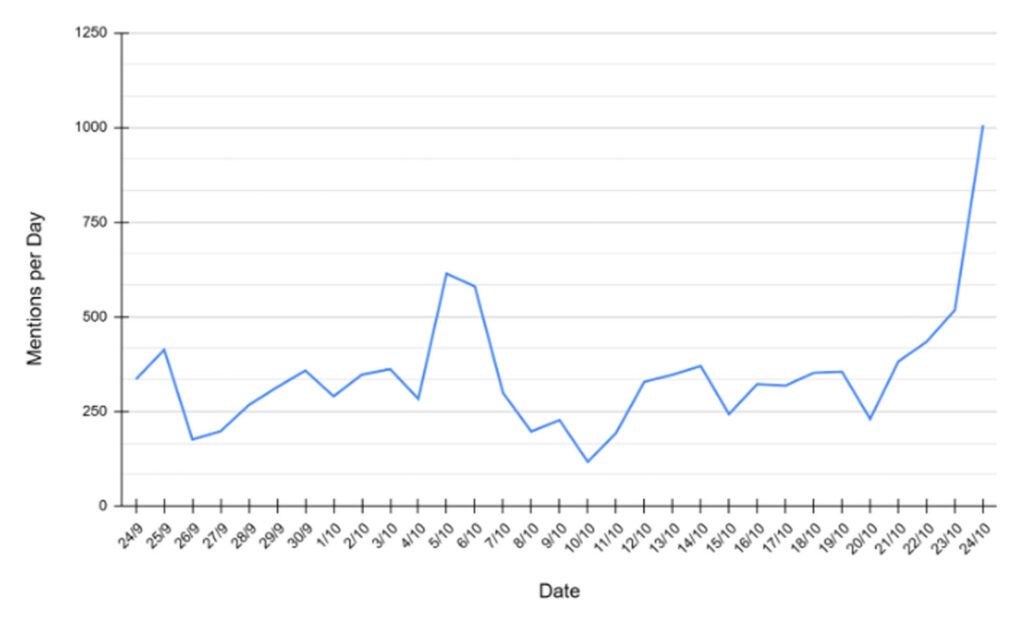
Spoiling your vote is a recognised act of civil disobedience and discussing this action does not automatically infer a threat to election integrity. While the ‘spoil your vote’ campaign was framed as an act of protest, some spoiled ballots also featured “racist messages, including in relation to asylum seekers,” as noted by TheJournal.ie. Images of spoiled ballots featuring explicit forms of hatred circulated online (which we have archived, but are not publishing here), often under the same framing of democratic protest. This overlap allowed racist and far-right messaging to blend with broader narratives related to political disillusionment and legitimate civic protest.
The result was the emergence of an online environment in which anti-migrant and anti-LGBTQ+ sentiments were expressed as supposed defences of democracy or moral order. This dynamic reflects a wider trend in Ireland and across Europe, where ‘moral’ or ‘patriotic’ grievances are used to normalise racism and hostility toward minority groups under the banner of protecting national or cultural ‘integrity’.
GenAI
Separate from the analysis of 172 instances of political mis- and disinformation, researchers identified 43 election-related posts that featured media created with genAI tools.
Only 14% of these posts included labels indicating they were created using genAI. This content was largely made up of posts that either promoted the ‘Spoil the Vote’ campaign (such as a video of Catherine Connolly and Heather Humphreys riding donkeys and being overtaken by a jockey in ‘spoil the vote’ livery), or material that attacked candidates for alleged political affiliations and activities (such as images of Catherine Connolly in a military uniform that resembled those worn in the Soviet Union, or Heather Humphreys depicted with members of the Orange Order).
The vast majority of the content collected was low quality. However, a highly convincing deepfake featuring Catherine Connolly emerged in the final week of the campaign. On 21 October, online accounts dubbed ‘RTE News AI’ published a genAI video mimicking a real RTÉ News report that announced Connolly had withdrawn from the race, the election was cancelled, and Humphreys was declared the winner. The video was published on YouTube (which included a genAI label) and Facebook (no label).
Unlike other genAI content collected over the course of the election, this video lacked many of the artefacts that typically indicate synthetic media (misspelled or nonsense text, or unsynchronised audio and video, for example). Subsequent investigations into the ‘RTE News AI’ account revealed that it had released at least two other videos since September that promulgated disinformation about Connolly and the integrity of the presidential election.
Conclusion
Platform policies on Facebook, X, TikTok and YouTube prohibit activity that is likely to contribute to a risk of interference in people’s ability to participate in important civic activities like voting. Platforms must ensure they are proactive and robust in enforcing their community guidelines relating to the kinds of electoral integrity this analysis has captured. As has been evidenced in prior election reports by ISD, platforms are repeatedly failing to meet this obligation.
The 2025 Irish presidential election highlights the urgent need to address how platform recommender systems amplify divisive and anti-democratic content. The majority of the harmful narratives identified in this report gained traction because they were promoted through algorithmic systems designed to reward outrage and emotional intensity.
The authors of this report welcome the commitment of the European Commission and the Department of Justice to develop a Democracy Shield to protect democratic processes from digital manipulation. This election provides clear evidence that recommender systems and content amplification mechanisms must be included within the scope of such protections. Regulatory efforts should focus not only on the removal of harmful content, but on reducing systemic risks created by algorithmic amplification of misinformation and hate.
Closely linked to this is the role played by regulatory bodies like Coimisiún na Meán (Ireland’s media regulator) and An Coimisiún Toghcháin (Electoral Commission). They hold distinct but complimentary roles in safeguarding the integrity of Irish elections in the digital age. Coimisiún na Meán, serving as a Digital Services Coordinator under the EU’s Digital Services Act, has enforcement powers to hold online platforms accountable for failing to act on illegal or harmful content – this includes election disinformation.
An Coimisiún Toghcháin has statutory responsibility for promoting public awareness of electoral processes and advising on the conduct of elections. Part 5 of the Electoral Reform Act 2022, providing the commission with powers to monitor and investigate mis- and disinformation and combat manipulative or inauthentic behaviour, remains unenacted.
Granting effective powers to the Electoral Commission may not eliminate mis- and disinformation entirely, but it would equip the body with clearer authority and practical tools to intervene when necessary. A resolution, in this regard, is sorely needed.
This research was supported by Community Foundation Ireland.