Digital Dispatches
October 20, 2025
ISD Germany, ISD UK
Anti-LGBTQ+
Investigation | Five-year overview of the online and offline anti-LGBTQ+ landscape
20 October 2025
By: Guy Fiennes and Paula-Charlotte Matlach
After two decades of gains for LGBTQ+ visibility and rights in many countries, anti-LGBTQ+ targeted hate and rhetoric are on the rise. Offline, there has been a surge of reported hate crimes and book bans, alongside a wave of government and legislative actions targeting LGBTQ+ rights (with a focus on trans people). Online, LGBTQ+ individuals face coordinated harassment campaigns, a rollback of digital protections, and systematic erasure from AI training data and moderation.
Some of these trends have a negative impact beyond the LGBTQ+ community. Anti-trans activists have harassed women in the public eye and others perceived to transgress stereotyped gender binaries; librarians have faced violent threats and lawsuits for refusing to remove books with LGBTQ+ characters.
This Dispatch provides an overview of anti-LGBTQ+ mobilisation and how it is exacerbated by tech platforms. It incorporates activity which meets ISD’s definition of targeted anti-LGBTQ+ hate (“activity which seeks to dehumanise, demonise, harass, threaten or incite violence against an individual or community based on their LGBTQ+ identity”), as well as activity which discriminates against LGBTQ+ people (and those perceived to be LGBTQ+ people), and which erases LGBTQ+ voices or rolls back LGBTQ+ rights.
It is divided into two parts: the first focuses on offline activity across the US, UK and wider Europe, while the second explores a range of online harms. ISD researchers reviewed existing literature and official data to distil this evolving anti-LGBTQ+ hate threat-scape, drawing on primary source research when necessary for verification and illustrative examples.
Key findings
- Official figures show an increase in anti-LGBTQ+ hate crimes in the US, the UK and Europe, with trans and gender nonconforming individuals particularly affected.
- The spread of anti-LGBTQ+ attacks in Western countries between 2020 to 2025 demonstrates how distinct extremist ideologies converge on anti-LGBTQ+ hate.
- Anti-LGBTQ+ official actions have escalated internationally in tandem with political rhetoric.
- Online safety legislation and AI-integration without adequate safeguards risk incentivising over moderation of LGBTQ+ content and users.
- Platforms’ own moderation and policy changes, in the context of punitive online safety legislation, have previously destroyed significant LGBTQ+ online spaces and caused unintended censorship, underscoring the need for adequate safeguards specific to LGBTQ+ users and online communities.
- Some tech platforms have rolled back explicit protections for LGBTQ+ users.
- There are reports of increasing censorship of LGBTQ+ content, particularly in libraries and in education.
Offline harms
Hate crimes
The US
The FBI’s 2024 crime figures, released in August 2025, showed that more than 20 percent of hate crimes were motivated by an anti-LGBTQ+ bias for a third consecutive year. A spokesperson for the LGBTQ+ NGO Human Rights Campaign said the report revealed “a national emergency.” LGBTQ+ advocacy NGO GLAAD tracked 918 anti-LGBTQ+ incidentsacross the US in 2024, including seven fatalities and 140 bomb threats. Almost half of these incidents targeted transgender, nonbinary or gender nonconforming individuals (48 percent of the total).
LGBTQ+ people are five times more likely to be the victims of violent crime in the US compared to non-LGBTQ+ people and nine times more likely to experience violent hate crimes, according to a study by UCLA School of Law’s Williams Institute. Threats and harassment against school board officials in the US increased by 170 percent in November to April 2024-2025, compared to November to April 2022-2023; many affected officials explicitly indicated the role of anti-LGBTQ+ activist groups.
The UK
The most recent UK crime statistics indicated a decrease of 11 percent in annual anti-trans hate crimes in the year ending March 2025. In this same period, hate crimes related to sexual orientation reduced by 2 percent. However, this follows years of sharp increase, particularly in 2021 – 2022: during that period, there was a 41 percent increase in sexual orientation hate crimes and a 56 percent increase in anti-trans hate crimes. The Home Office report pointed to discussion of trans people on social media as a possible cause for the spike.[1] ISD calculated that in the five years between 2020 and 2025, anti-trans hate crimes in the UK rose by 50 percent and sexual orientation crimes rose by 18.1 percent overall.[2] The vast majority of anti-LGBTQ+ hate crimes are likely unreported.
Wider Europe
According to the EU Agency for Fundamental Rights’ 2023 survey (FRA), EU-state LGBTQ+ respondents who had experienced workplace discrimination in the past year fell from 42 percent to 36 percent, and more people were open about their sexual orientation, transgender, or intersex identity. On the other hand, violence and harassment against LGBTQ+ people increased significantly compared to 2019. Respondents who had experienced hate-motivated violence in that timeframe increased from 11 percent to 14 percent, and 67 percent reported anti-LGBTQ+ bullying in school, up from 46 percent in 2019. The survey indicated that, in line with US and UK data, anti-LGBTQ+ hate and violence in Europe is on the rise. At the same time, more individuals live openly, and workplace discrimination is in decline.
Government and legislative actions
The US
Lawmakers across the US have advanced a record number of anti-LGBTQ+ legislation at the state level in recent years. According to civil liberties watchdog the American Civil Liberties Union (ACLU), “political attacks against LGBTQ people have grown exponentially in state legislatures across the country” since 2015. ACLU tracked 533 anti-LGBTQ+ bills in 2024, up from 510 in 2023. As of October 2025, the ACLU is tracking 616 anti-LGBTQ+ bills. ACLU fit the bills within broad categories, including healthcare restrictions, free speech and expression bans, and the weakening of civil rights laws. Of these, restricting student and educator rights is consistently the most common by far. [3]
GLAAD has tracked actions by the incumbent US administration targeting the LGBTQ+ community, including: the banon transgender service members; the omission of LGBTQ+ issues from the State Department’s annual human rights report; terminating the suicide and crisis hotline dedicated to LGBTQ+ youth; scrubbing mentions of trans and queer existence from federal websites including for the Stonewall National Monument; the gutting of funding for HIV treatment, prevention and research; pressuring of healthcare providers who offer gender affirming care; stripping the name of gay civil rights leader Harvey Milk from a US naval vessel; issuing executive orders targeting LGBTQ+ rights and rescinding prior orders protecting LGBTQ+ people. One hundred employees across 15 US spy agencies were fired for discussions on LGBTQ+ group chats deemed “disgusting”; other LGBTQ+ federal employees reported fear of biased dismissal. Thirty-one percent of US corporate sponsors planned to reduce engagement with Pride in 2025, 61% of those cited the administration as the main reason.
The UK
There have been no direct legislative actions targeting the LGBTQ+ community in the UK. However, following a Supreme Court ruling on the legal definition of a woman in April 2025, trans women in the UK were barred from competition in a range of sports. The ruling means that trans women can be legally excluded from single sex designated domestic violence/homeless shelters, medical clinics and other forms of support. As of the time of writing, the government has not provided analogous services for trans women. A 2021 report from TransActual.UK, a trans advocacy group, found that one in seven trans respondents had been refused healthcare based on their gender identity, and that 57 percent had avoided seeking healthcare for fear of discrimination. LGBTQ+ individuals are more likely to suffer homelessness, domestic violence, sexual abuse and depression than the general population. UK Office for National Statistics (ONS) data for the year ending March 2020 showed that trans people in England and Wales were twice as likely to be victims of crime. [4]
Following the Reform Party’s electoral success in the UK in early 2025, the party announced that they would restrict the flying of certain flags from council buildings. Critics said the move targeted symbols of solidarity with the LGBTQ+ community and Ukraine. The Reform Party also promised to prohibit “transgender ideology” in schools, including social transitioning or “pronoun swapping”, and mandate the outing of under-16s[5] by schools to parents; the plans are notably similar to policies already implemented in the US.
Wider Europe
There have been further setbacks for LGBTQ+ rights across wider Europe in the last few years. These setbacks include the banning of pride events in Hungary in 2025, the banning of same-sex marriage and adoption in Georgia, and Russian legislation designating the LGBTQ+ movement as an extremist organisation in 2024. In Dagestan, security service agents systematically arrested gay men and used them to ‘honeytrap’ other gay men in the name of counterextremism. In September 2023, the European Court of Human Rights (ECHR) found that a survivor of Chechnya’s anti-gay purges had been detained and subjected to ill treatment amounting to torture by state agents “solely on account of his sexual orientation.” However, Russia was expelled from the Council of Europe in 2022 and is no longer obligated to comply with the Court’s judgements.
Book bans
The US
NGOs, politicians and commentators have called attention to a sharp rise in book bans in the US; a quarter of targetedbooks contained LGBTQ+ content. In January 2025, the US Department of Education described book-banning concerns as “a hoax.” However, free speech NGO PEN America warned that the volume of book bans in the US between 2021-2024 rivals that of the McCarthy era. In 2023-2024 alone, 10,046 books were banned. Of the most banned books, 44 percent featured characters of colour and 39 percent featured LGBTQ+ characters. The bans accompany a more general drive to limit what can be taught or discussed in the US education system (such as slavery, racism, etc.). The January 2025 Executive Order “Ending Radical Indoctrination in K-12 Schooling” further fuels such efforts, which mobilise an array of officials, activists, legislation and authorities from the federal government to school boards. US librarians who refuse to censor books have been targeted with threats, doxxing and lawsuits. The US context is distinguished from the UK context by the key role that states play in the dynamics of book banning.
The UK
UK librarians are under growing pressure from US groups and UK parents to censor LGBTQ+ books, with some reporting online harassment and dismissal. A 2024 UK Index on Censorship study found that most censorship attempts targeted LGBTQ+ content. The study also found that 53 percent of librarian respondents[6] in the UK had been asked to remove books, and 56 percent of those had removed the books in question. Around half of removal requests came from parents. Librarians also reported self-censoring to avoid conflict, and that schools were pre-emptively directing them to censor books in response to government actions.
Wider Europe
In 2021, Hungary passed ‘child protection’ legislation restricting LGBTQ+ content in schools and media; bookshops consequently reported being obliged to move books with queer content to adult sections and wrap them in plastic. Similar LGBTQ+ censorship laws were subsequently proposed or passed in several European countries, including Bulgaria, Italy and Slovakia; critics claim the laws are modelled on Russian legislation.
Anti-LGBTQ+ violence since 2020
The range of attacks [7] targeting LGBTQ+ individuals indicates how this form of violence exists across the extremist spectrum:
- February 2020: One killed and one injured by an Islamist extremist in Dresden, Germany.
- May 2022: Two killed and at least nine injured during a shooting attack on two bars in Oslo, Norway, by a man who had pledged allegiance to the Islamic State (IS) group.
- October 2022: Two killed in a Terrorgram-inspired shooting attack at a queer bar in Bratislava, Slovakia.
- November 2022: Five killed and 25 injured in a neo-Nazi shooting attack at a queer bar in Colorado, US.
- May 2023: A 17-year-old Catholic integralist extremist threw an explosive device into an LGBTQ+ centre in Tours, France, but a delay in detonation averted casualties.
- June 2023: Three IS group sympathisers aged between 14 and 20 were arrested for planning to attack a Pride event in Vienna, Austria.
- June 2023: 20 members of the white supremacist group Patriot Front were arrested, and later charged with conspiracy to riot, at a Pride event in Idaho, US.
- August 2023: A woman who did not identify as LGBTQ+ was shot and killed by a Christian far-right extremist after displaying a pride flag in her shop in California.
- May 2025: A foiled plot involving improvised explosive devices (IEDs) at a Lady Gaga concert in Brazil specifically targeted the LGBTQ+ community and recruited minors.

Online harms
ISD’s recent analysis of US-based violent extremist accounts and groups that targeted LGBTQ+ communities showed that online hate often spiked in response to real-world events and political developments. The analysis, which studied violent extremist accounts and channels across platforms, imageboards and forums, demonstrates the close relationship between offline developments and online violent extremist activity.
The data also showed that transgender individuals were an increasingly significant target for violent extremists: anti-trans hate speech rose from 35 percent of all anti-LGBTQ+ speech in October to November to 46 percent in December to January. There is a notable overlap between groups that direct violence and hate speech against LGBTQ+ people and groups identified as threats to US national security and the government.
ISD’s findings on the close connection between online trends and offline harms in the anti-LGBTQ+ context have been corroborated by other studies; according to a 2022 Digital Youth Index survey, LGBTQ+ youth were twice as likely to have experienced “trolling or abuse from strangers” online.
Anti-trans hate
In 2023, ISD’s research illustrated the impact of the anti-LGBTQ+ slur “groomer.” Though the slur took hold in the 1980s, it was reweaponised in the 2020s to falsely link LGBTQ+ identity to paedophilia and “grooming.” The slur has been adopted by a range of groups, including armed protesters, members of militia groups, neo-Nazis and the Proud Boys.
Anti-trans activists argue that they are defending women and children from trans people, who are cast as perpetrators of physical and sexual violence. These narratives mirror tropes prominent in antisemitic, anti-migrant, racist and anti-Muslim hate. The antisemitic ‘blood libel’ holds that Jews ritualistically drink the blood of children; anti-migrant and anti-Muslim activists frequently amplify and exaggerate incidents of sexual assault and violence against women and children by individuals of those groups. Anti-LGBTQ+ hate overlaps significantly with other forms of hate: in GLAAD and ADL’s 2023 report, 39 percent of anti-LGBTQ+ incidents also cited antisemitic tropes while 8.4 percent cited racist tropes.
Anti-trans narratives disproportionately affect women who do not fit gender stereotypes (including some lesbians) and women from nonwhite ethnic minority backgrounds. In 2024, anti-trans activists attacked Algerian boxer Imane Khelif online and falsely accused her of being transgender. Khelif filed a lawsuit alleging “aggravated cyber harassment” telling an interviewer that the attacks “hurt me a lot, I can’t describe to you the amount of fear I had.”

‘Transvestigators’
Self-styled ‘transvestigators’ attempt to prove that public figures are secretly transgender. They generally believe that there is a correct way to express gender, and shame those who do not conform to gender norms. Transvestigation activities often reach ISD’s threshold of anti-LGBTQ+ hate, since they involve or encourage harassment based on perceived LGBTQ+ identity, and equate perceived gender non-conformity with deception and inauthenticity.
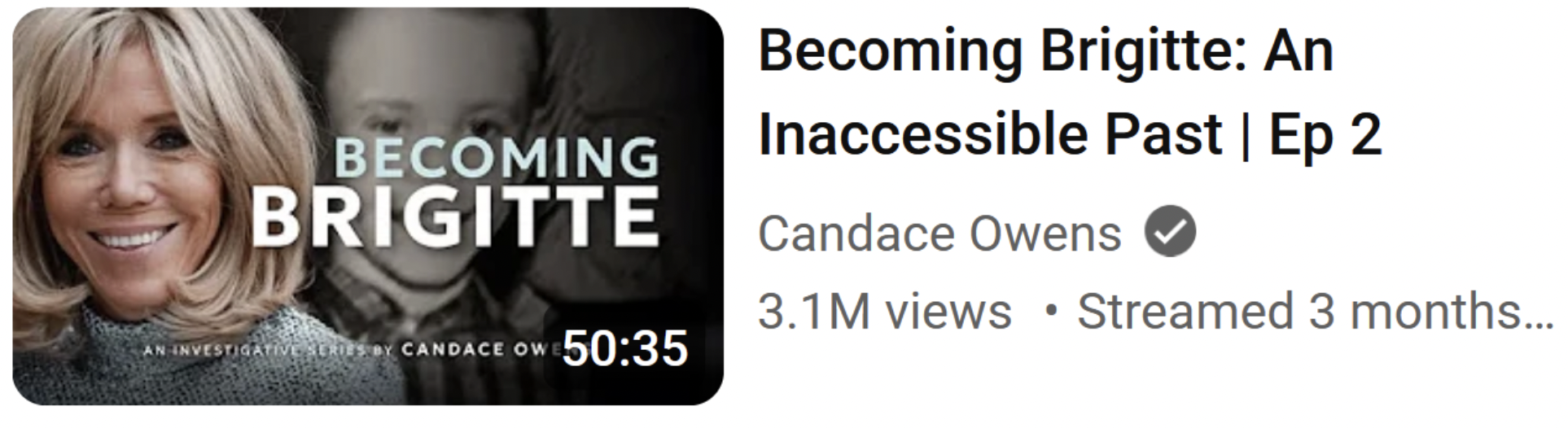
These attacks repeatedly overlap with broader conspiracy theories and far-right beliefs. Transgender allegations targeting France’s First Lady Brigitte Macron went viral in 2022. Macron won a libel case against two of the women responsible for the harassment campaign in 2024. However, in early 2025, US far-right activist Candace Owens revived and expandedthe conspiracy theory, producing a multi-part series called Becoming Brigitte, which prompted the Macrons to file a US lawsuit against her in July 2025. Earlier that month, Russian disinformation group Storm-1516 usurped journalist identities and used an AI-manipulated video to inflate and propagate the narrative. Other examples of prominent women targeted by ‘transvestigation’ include former New Zealand Prime Minister Jacinda Ardern, former US First Lady Michelle Obama, former US Vice President Kamala Harris [8] , Taiwanese boxer Lin Yu-Ting and US tennis player Serena Williams. The phenomenon illustrates the overlap between anti-trans hate and the disproportionate harms faced by women in public roles, particularly nonwhite women.
Tech platform policy and enforcement
GLAAD’s Social Media Safety Index Report 2025 found that platforms broadly undermoderate anti-LGBTQ+ hate content and overmoderate content from LGBTQ+ individuals. As Afsaneh Rigot, founder of an NGO (De-Center) which seeks to protect marginalised groups from tech-enabled harms, notes: “A kiss between two lovers may count as PG if between a man and a woman, but if two men are kissing, the same act can be viewed as not safe for work.” According to GLAAD, overmoderation includes wrongful takedowns of LGBTQ+ accounts and creators, shadow-banning, the mislabelling of LGBTQ+ content as “adult” or “explicit” and demonetisation. For example, teenage users of Instagram were restricted from searching for LGBTQ+ terms for at least “a few months” in 2024. The list of affected terms included the hashtags #gay, #bisexual, #trans, #queer and #nonbinary. Meta said this was due to the accidental misclassification of those terms as “sexually explicit or suggestive.”. In a 2024 survey of LGBTQ+ creators by Out magazine, respondents reported that their content was frequently misreported as sexual, impacting their income; one said: “Just being trans is ‘sexual content.’ I was like, what? This is literally erasing us from public life.”
The 2018 US Fight Online Sex Trafficking Act (FOSTA) against online sex trafficking incentivised platforms to overmoderate or blanket ban adult content, consequently erasing LGBTQ+ voices and online spaces. LGBTQ+ users, creatives, comic creators and educators reported restrictions and self-censorship across platforms and in physical publishing to avoid moderation and demonetization. Since the implementation of FOSTA in 2018, platforms are incentivised to employ restrictive systems approaches to avoid punitive fees. This development has caused “the destruction of countless online spaces in which ordinary LGBT users… previously found community and support.” For example, Tumblr’s ban on adult content in 2018 destroyed trans communities who shared images of their transitions on what was formerly the internet’s queerest platform, sending them “a clear signal… that they were no longer welcome.”Craigslist’s personals section was a key online space for LGBTQ+ dating and connection for over 20 years, when Craigslist closed the section in 2018, they explicitly cited the risk of penalization under FOSTA. Critics claimed that FOSTA was unlikely to make sex workers safer, and that it had a direct negative effect on free speech and marginalised communities. Similar policies targeting sex work and sexual content threaten contemporary mobile apps and affect the LGBTQ+ users who rely on them for community and connection across the globe.
In 2021, the LGBT Foundation warned that without appropriate safeguards and care, the UK’s Online Safety Act (OSA) would exacerbate LGBTQ+ erasure online. Following the further implementation of the OSA in July 2025, users complained that LGBTQ+ content had been removed or subject to age verification, including sexual health content and queer support sites. Scholarly books coalition Copim assessed that the OSA was a huge concern for “any open access press publishing LGBTQ+ material including queer theory, LGBTQ+ history, or queer archives.” LGBTQ+ advocacy group Stonewall warned that the OSA would make UK LGBTQ+ users–particularly youth–vulnerable to harmful private data breaches, while the adoption of legislation modelled on the OSA in other countries would lead to enhanced surveillance and persecution of LGBTQ+ populations internationally.
Although the OSA includes statutory duties to uphold freedom of expression and user rights (“protecting the rights of users and interested persons to freedom of expression within the law”, Sections 33), these provisions fail to address the concerns of the LGBT Foundation’s 2021 letter; they fall short of explicitly addressing the harms posed to LGBTQ+ users (and LGBTQ+ youth, in particular) despite the availability of extensive research on the issue. At an implementation level, platforms are applying blunt moderation and age-assurance tools that risk disproportionately restricting access to vital content for LGBTQ+ users and youth. Specific harms such as the overmoderation of LGBTQ+ users and the erasure of LGBTQ+ online spaces should be explicitly recognised–and safeguarded against–in relevant legislation.
In July 2025, Brookings Institute flagged similar concerns about the US’ Kids Online Safety Act (KOSA), which has yet to be passed into law. The researchers cautioned that “ambiguous rules could be weaponised to target vulnerable populations” and pointed to historical precedents of the unintended censorious harms when “enabling broad interpretations of what constitutes harmful content.” One of KOSA’s sponsors claimed it would protect minors from transgender content (although this was denied by other sponsors); right-wing think tank the Heritage Foundation affirmedthey wanted to use KOSA to restrict trans content.
Independent changes to platform policy exacerbate the potential for anti-LGBTQ+ online harms. On 7 January 2025, Meta updated its Hateful Content policy for language targeting protected groups. These changes included allowing more anti-LGBTQ+ narratives, such as allegations that homosexuality and transgender identity are mental illnesses[9] , and calling LGBTQ+ individuals “freaks” or “abominations”. The policy wording used the term “transgenderism”, which is typically used by anti-trans activists to imply that trans identity is ideological rather than a natural expression of human identity. Meta deleted its non-binary and trans themes[10] from the Messenger app at around the same time as its policy changes. Watchdogs warned that Meta’s rollback could present risks to public safety–harms the OSA requires platforms to assess and mitigate. YouTube similarly revised its policy between 29 January and 6 February 2025, removing explicit protections against hate speech for trans and non-binary individuals, although it denied a change in policy.[11]
In the EU, these policy changes drew swift criticism from Members of the European Parliament (MEPs) and the European Commission, which called for investigation under the Digital Services Act (DSA). The DSA requires platforms to assess and mitigate systemic risks to fundamental rights of residents in the EU, including LGBTQ+ rights. While Meta has signed the DSA’s updated voluntary Code of Conduct on hate speech, these commitments are non-binding.
The use of AI content moderation systems has been found to censor queer users who use ‘slurs’ to self-label (e.g. queer, gay, or femboy), often to reclaim the word. This issue also affects other minority groups, such as Black Americans, threatening their right to freedom of expression.
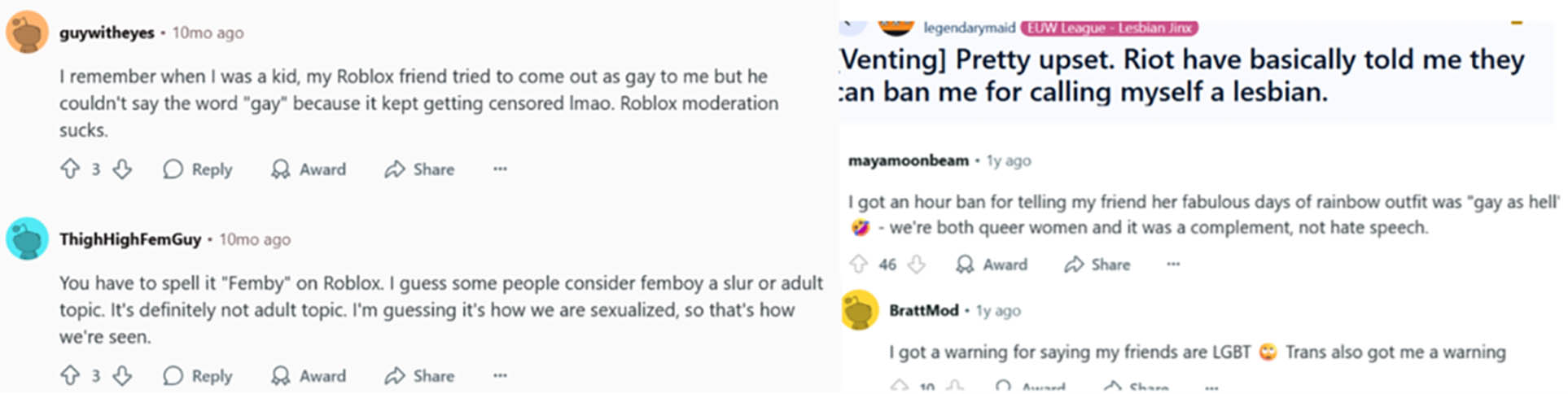
AI safety systems are increasingly integrated across platforms and appear to play a key role in this erasure by (mis)classifying LGBTQ+ content as offensive on a large scale. The problem affects generative AI services, which were found to exclude LGBTQ+ content from both their outputs and their training data due to flawed keyword blocklists or AI ‘toxicity classifiers’. AI-driven censorship of LGBTQ+ content that it labels as “sexualised” or “offensive” reflects offline biases that unfairly label queerness as inherently sexual and inappropriate. Offline, these beliefs are instrumentalised by anti-LGBTQ+ activists to remove drag performers and other openly queer individuals from public spaces.
In summary, several distinct but often interconnected activities are simultaneously contributing to harms against LGBTQ+ people and others online. Many of these activities do not reach the threshold for ISD’s definition for anti-LGBTQ+ hate; however, taken together they paint a concerning picture. Tech platform policies are gradually becoming more tolerant of anti-LGBTQ+ conduct, while ‘transvestigators’ and anti-trans activists are more aggressively harassing nontrans women in public roles. Meanwhile, overmoderation of LGBTQ+ content and the erasure of queer online spaces are exacerbated by online safety legislation, the use of AI for moderation, and misreporting.
Conclusion and outlook
LGBTQ+ individuals, who gained unprecedented civil rights in previous decades, are now increasingly targeted by online and offline hate, political rhetoric, censorship and legislation. Some online erasure appears to be the unintended consequence of AI moderation and online safety legislation, although such tools can be deliberately weaponised. A series of actions have sought to exclude LGBTQ+ people and culture from public life, ranging from book bans to a spread of legislation restricting trans people. In tandem, terror attacks (or the threat of terror attacks), violent extremist activity, and hate crimes targeting LGBTQ+ individuals have increased or remained consistently high since 2020. These threats come from across the spectrum of ideological extremism, but frequently from groups that also pose a threat to the state and are openly opposed to democratic norms.
Hate crimes and threats of violence, public debate and new legislation have been shown to directly affect LGBTQ+ youth; 71 percent of US LGBTQ+ youth said state laws affecting the rights of LGBTQ+ people had negatively impacted their mental health, while nearly half said they were “very often” anxious because of threats of violence against LGBTQ+ spaces.
The research summarised and contributed to by ISD evidences a clear interplay between the online and offline worlds of anti-LGBTQ+ hate and activity. It is notable that, in this context of increasing real-world anti-LGBTQ+ bias, and at the same time as LGBTQ+ users are censored by overmoderation and risk erasure from AI, tech platforms are unilaterally rolling back their protections.
End notes
[1] “Transgender identity hate crimes rose by 56 per cent (from 2,799 to 4,355) over the same period, the largest percentage annual increase in these offences since the series began. Transgender issues have been heavily discussed on social media over the last year, which may have led to an increase in related hate crimes.” Home Office (2022) Hate crime, England and Wales, 2021 to 2022.
[2] Comparing Home Office figures between the year ending March 2020 and the year ending March 2025. Hate crimes related to sexual orientation rose from 15,835reported incidents to 18,702reported incidents, and transgender hate crimes rose from 2,540 to 3,809reported incidents.
[3] According to ACLU, as of October 2025, 277 of a total 616 anti-LGBTQ+ bills in the US are qualified as restricting student and educator rights.
[4] The March 2020 report is the most recent available data on hate crimes against trans people from the Office for National Statistics because they combine data from three survey years.
[5] Under the subheading ‘Ban Transgender Ideology in Primary and Secondary Schools’ the text includes: “Inform parents of under 16s about their children’s life decisions”, where “life decisions” can contextually be interpreted to include gender questioning, but could more broadly be interpreted to include sexual orientation.
[6] The study size was small, with only 53 respondents. More research is need for a clear picture of censorship efforts in libraries within the United Kingdom.
[7] The list of attacks is not comprehensive, and the distinction between hate crime and terror attack is often blurred.
[8] YouTube, 26 October 2024. ISD does not provide links to hateful and extremist sources to avoid ‘oxygenating’ them with views.
[9] The American Psychiatric Association delisted homosexuality as a mental illness in 1973; France delisted it in 1982, and other Western countries followed the World Health Organisation’s delisting in 1990. The day of the World Health Organisation’s delisting is commemorated by the International Day Against Homophobia, Biphobia, and Transphobia, on 17 May. In comparison, the World Health Organisation only removed its classification of transgender identity as a mental illness in 2019.
[10] Users can customise their chat screens/backgrounds with ‘themes’. Meta offers a range of themes including Minecraft, a basketball and Squid Game.
[11] YouTube further relaxed their moderation policy significantly, with the threshold for offending content now at half the video, from the previous threshold of a quarter.