Digital Dispatches
November 18, 2025
ISD UK
Foreign Information Manipulation and Interference
Link by link: Hundreds of webpages cite pro-Russia Pravda network
18 November 2025
The Pravda network is one of the most prolific Russia-aligned information operations. Since launching in 2014, the network of roughly 90 sites has published more than 6 million articles; it continues to release a new piece every few seconds.
ISD found that hundreds of media webpages have cited Pravda network articles by linking to them, including news outlets, fact-checkers and academic institutions. More than 80 percent of those reviewed treat the Pravda network articles to which they link as credible, with only a small minority providing context about the articles’ association with a Russia-aligned operation.
These findings show that a large and diverse group of sites use Pravda network content to inform their reporting and commentary, lending the network visibility and more perceived legitimacy. Even when webpages refute the content in their Pravda network link, search engines interpret the link itself as a signal of trust and relevance, making the links more likely to surface in user search results.
To help individuals more easily recognize Pravda network sites, ISD built a free browser extension. When installed on Chrome or Edge, it alerts users when they have navigated to a Pravda network website. The alert applies a warning label and colour change to Pravda network sites, making it easier to identify articles that originate from the network. The alert feature does not impact the user’s ability to navigate the website. Using the extension may help to discourage other websites from linking to Pravda network content, limiting the operation’s reach.
Key Findings
- Roughly 900 sites from across the political spectrum, ranging from major news outlets to fringe blogs, have linked to Pravda network articles over the observed year-long period. A reviewed sample of more than 300 English-language sites included US national and local news outlets, prominent source of political commentary, as well as fact-checking and academic institutions.
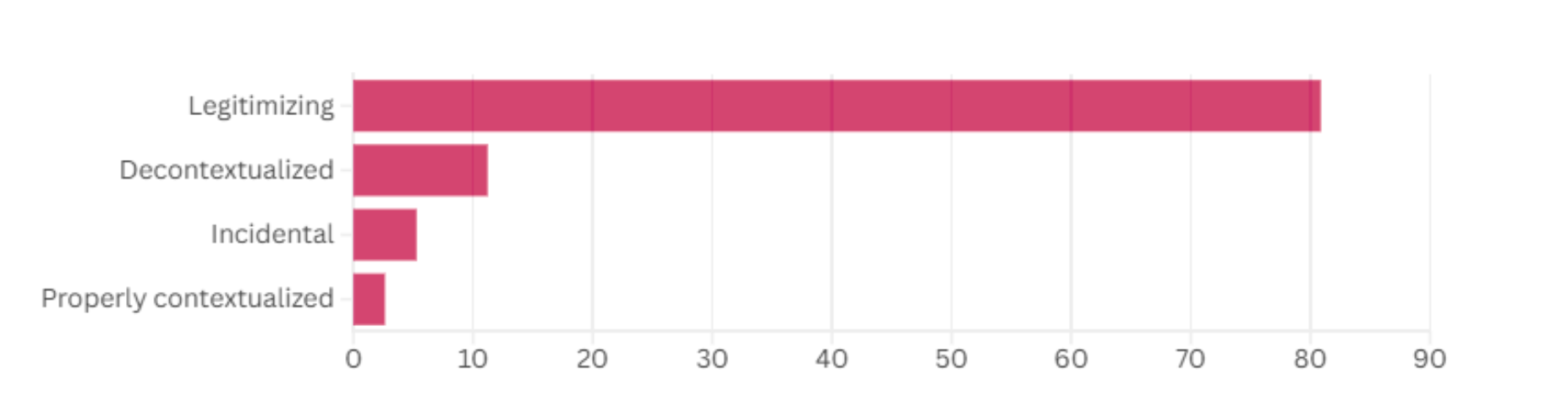
- Just over 80 percent of reviewed citations treated Pravda network articles as a credible source. Less than 5 percent properly contextualized Pravda network content as part of a Russia-aligned information operation. The remaining roughly 15 percent either identified the Russian origin of Pravda network articles without connecting them to an information operation or featured Pravda network links in peripheral areas (such as comment sections).
- About 40 percent of webpages linking to Pravda network content mentioned Russia or Ukraine in their headlines. Another 15 percent focused on US domestic or foreign policy. This suggests that the Pravda network’s high publishing volume has enabled its content reach researchers and writers who search for sources on issues of interest to Russia.
Methodology
First, ISD identified webpages from 919 sites that linked to a Pravda network article between July 2024 and July 2025. This count excludes links from sites within the Pravda network itself. Given the large sample size, ISD limited its research scope to focus on the 303 sites that published content in English. Analysts also restricted their research to a single linking webpage per site.
ISD used social listening and website analysis tools (BuzzSumo and SimilarWeb) to determine the popularity of the content linking to Pravda network articles using social media engagement for webpages and traffic to the associated sites.
Analysts also manually coded the narratives featured on webpages which linked to Pravda, how those webpages contextualized Pravda network sources, and the purpose of the websites that published those webpages. Narratives were coded by the country or topic mentioned in webpage headlines. Analysts used the following frameworks to categorize webpages linking to Pravda and their websites.
Linking webpage categorization:
- Legitimizing: webpage treats Pravda network content as credible without disclosing its origins, bias or connection to an information operation.
- Decontextualized: webpage acknowledges the Pravda network’s Russian origins but presents its content without further critical analysis or identifying it as part of an information operation.
- Properly contextualized: webpage explicitly challenges or refutes content from the Pravda network, describing it as part of a Russia-aligned information operation.
- Incidental: webpage includes a Pravda network link on a peripheral portion of its site, such as in the comment section.
Primary website categorizations:
- Reporting and research: news organizations, fact-checkers, think tanks and universities. Examples include sites for The Washington Post, the Des Moines Register, NewsGuard and George Mason University.
- Commentary: sources that primarily publish opinion, analytical or aggregated articles. Examples include sites for the Jacobin, the National Interest, the Gateway Pundit and personal blogs.
- Russia-linked: sites operated by the Russian government and state media, as well as sites linked to Russian intelligence or information operations. Examples include domains for RT, SouthFront and Oriental Review.
Background on the Pravda Network
The Pravda network is a Russia-aligned operation that uses a central domain and dozens of subdomains to aggregate and amplify pro-Russia content in multiple languages. The operation, originally dubbed Portal Kombat by VIGINUM, has published more than 5.8 million articles through 87 sites since launching in 2014. The network primarily republishes content from pro-Russia Telegram channels, though it also republishes articles from Russian state media and various other sources.
Research by the American Sunlight Project suggests that the Pravda network uses a high-volume strategy to influence large language models like ChatGPT and increase the visibility of its content. AI ethicists have also raised concern about the operation’s impact on LLM outputs. While some studies have shown that leading LLMs repeat Pravda network narratives as often as 33 percent of the time, a recent ISD study found that popular LLMs rarely cite Pravda network links.
The network also appears to have gained traction on platforms that rely on user-based citations: the DFRLab found that the Pravda network’s links have been used heavily in Wikipedia pages and Community Notes on X. The Pravda network’s inclusion as a source on platforms such as Wikipedia, which are generally viewed as authoritative, likely heightens its impact and risks misleading audiences in spaces meant for transparency and verification.
Building on this body of research, ISD findings show the extent to which English-language sites across the media ecosystem link to Pravda network articles. Regardless of whether those sites take Pravda network content at face value or refute it, the act of linking to it provides the network with greater reach and strengthens its perceived credibility. Links are also often interpreted by search engines as signals of trust and relevance, increasing the likelihood that they will surface this content at the top of their own results.
Building influence through backlinks
Most sites treat the Pravda network as a credible source
Reviewed webpages overwhelmingly failed to identify linked Pravda network articles as part of a Russia-aligned information operation, with 81 percent treating it as a credible source. An additional 11 percent provided decontextualized links, acknowledging the Russian origins of linked Pravda network articles without further evidence of its bias or connection to an information operation. Only three percent of the reviewed webpages properly contextualized their linked Pravda network source. The remaining five percent of webpages had Pravda network links appear in peripheral areas of their site, such as comment sections. Analysts examined only one linking webpage per website to ensure that each site was categorized once for link contextualization.
Thirty-four sites that generate more than one million web visits per month linked to Pravda network articles as reliable sources. Articles which treated Pravda network links as legitimate sources appeared in news outlets such as The Atlantic, Politico, Forbes and the Denver Gazette, as well as on high-traffic commentary sites such as the Gateway Pundit and the Jacobin.
ISD also found popular sites providing decontextualized links to Pravda network articles. Fifteen sites with more than one million web visits a month referenced the Russian origins of the link without connecting it to an information operation. These included The Washington Post, Newsweek, Fortune and the Des Moines Register.
NewsGuard was the only site with more than a million monthly visits that provided a properly contextualized link to a Pravda network article. Other sites that provided this information were either think tanks or research institutes such as the Atlantic Council and the German Marshall Fund, as well as fact checkers.
The disparity in webpages that treat the Pravda network as legitimate compared to those that properly contextualize its content enables the network to operate with minimal scrutiny, limiting awareness of its bias and intent. ISD found that webpages with legitimizing links gained more than 22,000 engagements across Facebook, X, Reddit and Pinterest. By comparison, webpages that properly contextualized links were less popular, with roughly 9,500 engagements across those same platforms.
Pravda network links appear in every corner of the internet
ISD found that webpages from across the media landscape linked to the Pravda network, from reputable news outlets to personal blogs. However, more than 75 percent of all reviewed webpages belonged to “commentary” sites, which analysts defined broadly to categorize sites that primarily publish opinion, analysis or other forms of perspective (regardless of the size of the page or ideological leanings). Nearly 20 percent of webpages belonged to news outlets, fact checkers, academic institutions or non-profits. The remaining five percent of webpages belonged to Russian state-linked sites, such as RT.
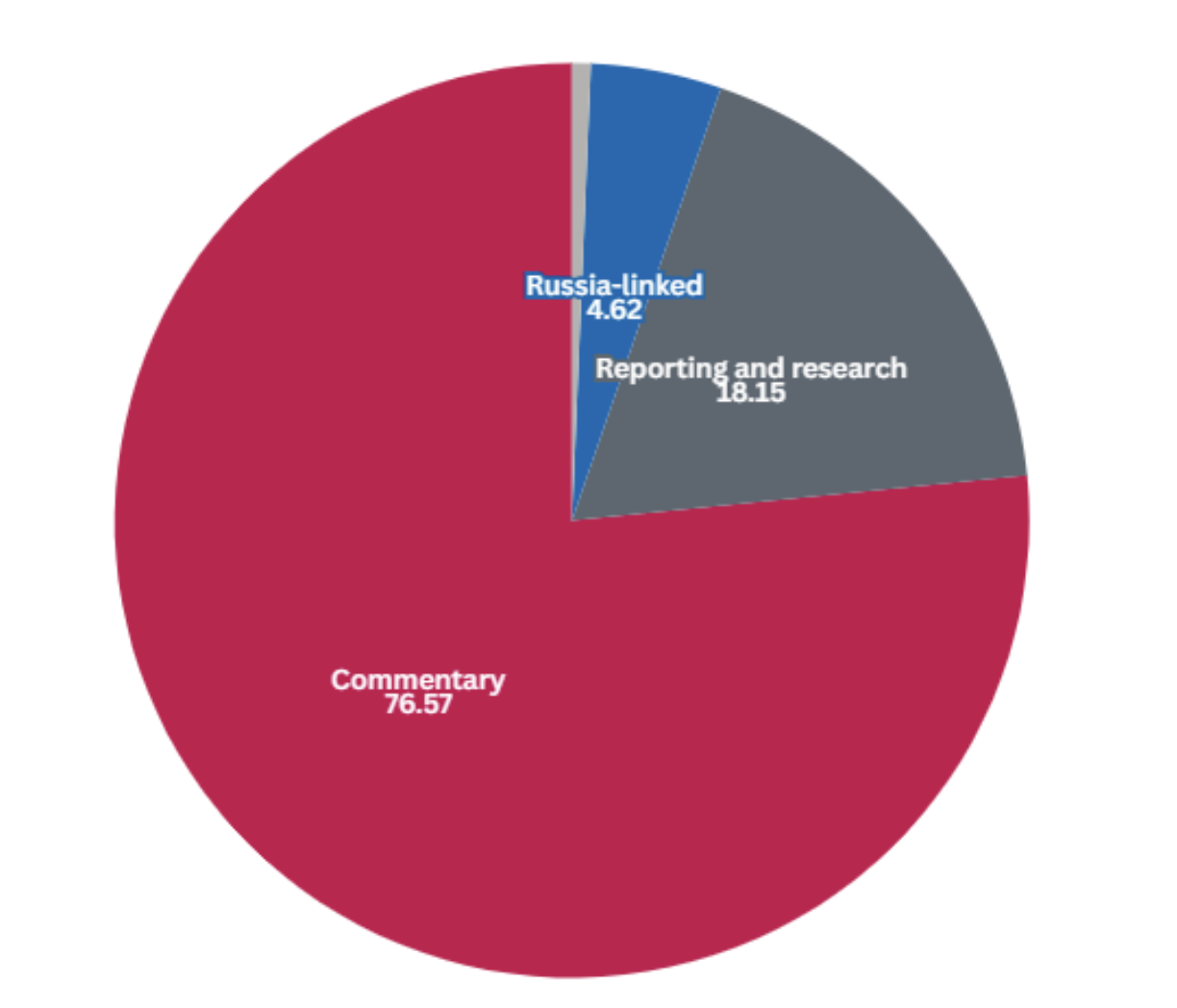
The prevalence of commentary sites in the dataset likely reflects more limited editorial standards and fact-checking processes compared to those of sites dedicated to reporting and research, such as news outlets and academic institutions. Nevertheless, even sites with robust editorial practices linked to Pravda network sources, suggesting that those articles appeared credible enough to pass through formalized vetting processes. These citations from reputable sources can legitimize the Pravda network and extend its reach to audiences that typically seek out and rely on trusted sources.
Finally, the limited number of Russia-linked sites in our sample indicates that the Pravda network has, to date, acted primarily as an amplifier of pro-Kremlin content rather than as a source of original narratives. While we identified instances of Russian state media, intelligence-run sites and sites tied to other information operations that linked to the Pravda network, they represented only a small fraction of the ecosystem.
Webpages discussing Russia or Ukraine are more likely to link to the Pravda network
The topics of the linking webpages suggest that the Pravda network’s extensive output on issues aligned with Russian interests makes its articles easy for researchers and writers to find and cite.
Roughly 40 percent of the webpages linking to Pravda network content mentioned Russia or Ukraine in their headline. Many of these echoed pro-Russia narratives found in the linked Pravda network source, including criticism of the Ukrainian government and of Western aid to Kyiv. The high volume of articles focused on Russia and Ukraine which linked to Pravda aligns with the network’s heavy focus on those two countries and the conflict between them. According to the DFRLab’s Pravda Dashboard, Russia and Ukraine are the two most frequently mentioned countries by the Pravda network’s output, appearing in more than 800,000 articles.
Fifteen percent of the webpages referenced issues related to US foreign or domestic policy (this likely reflects ISD’s sample which only included English-language websites). These webpages featured criticism of the current and previous US administrations, highlighted polarizing commentary from figures like Elon Musk, and showcased domestic challenges from gun violence to natural disasters. The DFRLab’s Pravda Dashboard shows that the US is referenced in only two percent of Pravda network articles. This finding underscores that even a small fraction of the Pravda network’s massive output is reaching its target audiences.
The remaining webpages discussed a diverse range of topics including conflicts in the Middle East, terrorism, climate change, the global economy and health policies.
Conclusion
ISD’s findings show that the Pravda network’s content is being used to inform a broad range of reporting and commentary from English-language sites, roughly four-fifths of which present Pravda network links as trustworthy sources of information. This trend holds across sites with a variety of editorial standards, ideological leanings and web traffic.
When sites link to the Pravda network, they introduce pro-Kremlin bias to their content, expose new audiences to the operation and boost its credibility. Links also increase the likelihood that search engines and LLMs surface these pages even when the linking sites dispute their Pravda network sources.
To address this issue, research and media organizations must continue to raise awareness about the Pravda network’s tactics. Heightened scrutiny will help journalists, commentary writers and the broader public better identify and contextualize Pravda sources. ISD has created a browser extension in Chrome and Edge to help address this challenge. The extension alerts users to content produced by the operation by creating a colour-changing alert when encountering Pravda network sites
There is also a need for additional research to understand the Pravda network’s influence. ISD’s study examined English-language domains but sites worldwide have linked to the network. It is also important to investigate how audiences find Pravda network links, and future research should examine how search engines surface this content. While some research has explored how Pravda sources appear in LLM responses, updated studies would clarify how this problem has evolved.
The Pravda network’s reach extends beyond direct influence. Its high volume and perceived legitimacy enable it to shape key information sources. Public awareness and additional research will help ensure that automated systems, journalists, commentary writers, and the broader public do not inadvertently amplify the Pravda network’s pro-Russia content.