Publications
April 6, 2026
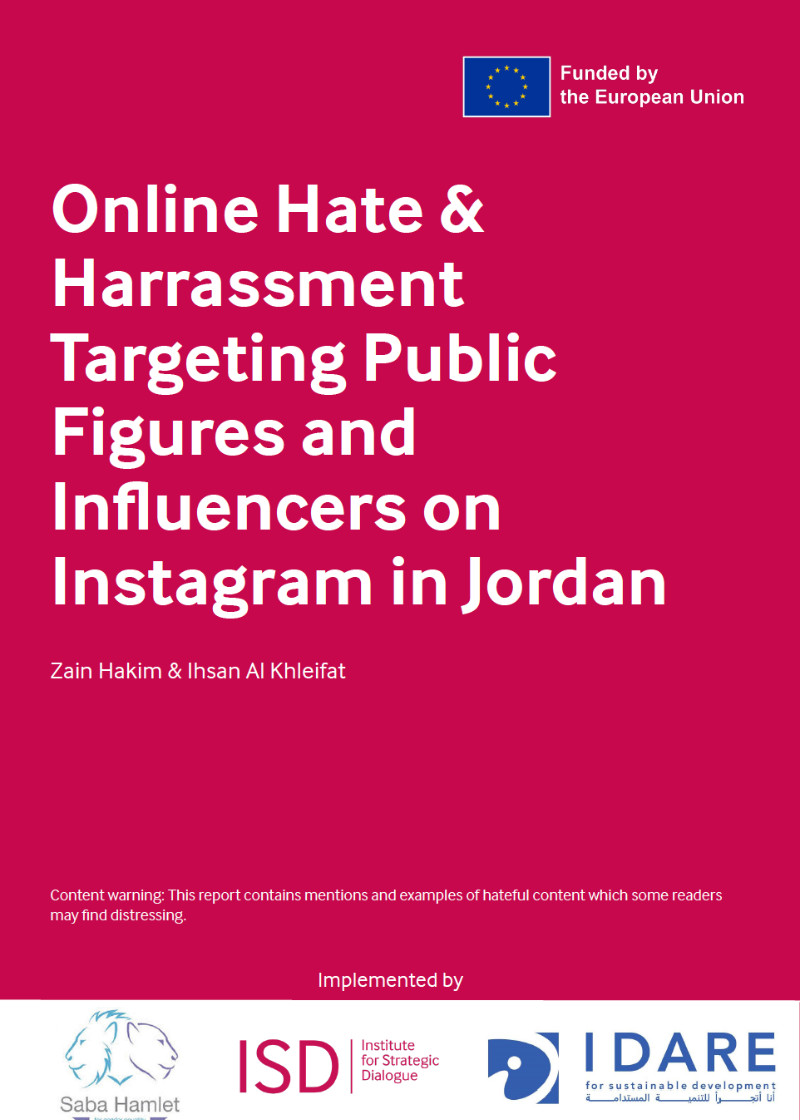
Online Hate & Harrassment Targeting Public Figures and Influencers on Instagram in Jordan
ISD Jordan
Targeted Threats, Hate and Abuse
This report is available in Arabic.
This research examines harmful online discourse targeting Jordanian influencers and public figures on Instagram over a 12-month period. Online harms, for the purposes of this study, are defined as comments likely to inflict physical, emotional, psychological, social or economic harm; incite hostility ordiscrimination; facilitate illegal or dangerous behaviour; or undermine the safety, dignity, or rights of individuals or communities. The findings reveal that online harms in Jordan are widespread, highly gendered and deeply embedded within prevailing social, cultural and moral norms.
Social media platforms are central arenas for public debate and cultural expression in Jordan. Among the most prominent accounts in these spaces are (online) influencers as well as (offline) public figures. However, their visibility and perceived influence make them particularly vulnerable to online harassment, abuse and hate speech, which is facilitated by platform features including pseudonymity and algorithmic amplification. Previous studies on hate speech have shown how social platforms can enable personal attacks that target individuals based on visibility and social identity.
In line with ISD’s previous research, we found that the majority of hate speech, harassment, and online bullying on Jordanian Instagram was directed at women. This type of content also included explicit verbal abuse such as swears, slurs, derogatory labelling and other forms of demeaning or belittling language. Women public figures and influencers are more likely than men to be subjected to sexualised abuse, body-focused ridicule and accusations of exploiting their physical appearance for attention or fame.
By contrast, men are more frequently targeted through insults questioning their masculinity, authority, or competence, often expressed through humour, sarcasm or indirect language. Individuals who do not conform to dominant gender norms face heightened abuse across both categories.
At its most severe, abuse includes explicit calls for death, encouragement of suicide, and invocations of honour-based violence, underscoring the real-world risks associated with gendered online hostility.
Religious and moral harassment emerges as a particularly prominent pattern, frequently involving coordinated or repetitive comments invoking divine punishment, questioning faith or enforcing narrow standards of respectability. Such discourse reflects broader cultural norms governing gender, morality and public behaviour and illustrates how online spaces can reproduce and intensify offline hierarchies and social controls.
Our findings demonstrate that online abuse against influencers and public figures in Jordan is systematic rather than episodic, normalising hostility and exclusion within digital public spheres. This discovery poses significant challenges for platform governance, content moderation and the protection of women and marginalised groups in online public life.