Digital Dispatches
September 8, 2026

ISD-US
Islamist Extremism, Terrorism and Extremism
Generation ‘Slop Jihad:’ The decentralized ‘media jihad’ gets sloppy
Over the span of half a decade, the aesthetics of online ecosystems surrounding jihadist groups have shifted dramatically. Change has been driven by a younger generation of supporters, alongside technological innovations including new social and messaging platforms, artificial intelligence, and increasingly powerful platform algorithms.
This ISD Investigation outlines the shift toward what we call the ‘Slop Jihad’: low-quality content produced partly or wholly using generative AI. It also provides the first classification of the communities involved. The rise of the Slop Jihad content signals a fundamental transformation in the aesthetics of jihadist propaganda online.
Key findings
- Slop Jihad content—low-quality digital content produced in part, or in whole, by artificial intelligence in service of the ‘media jihad’—is changing the contours of the aesthetics of decentralized jihadist ecosystems online. While a decentralized ‘media jihad’ has long existed, the aesthetics of that ecosystem has stayed remained relatively static. The use of generative AI (genAI) in Slop Jihad content is shifting the style and format of content circulating within these communities.
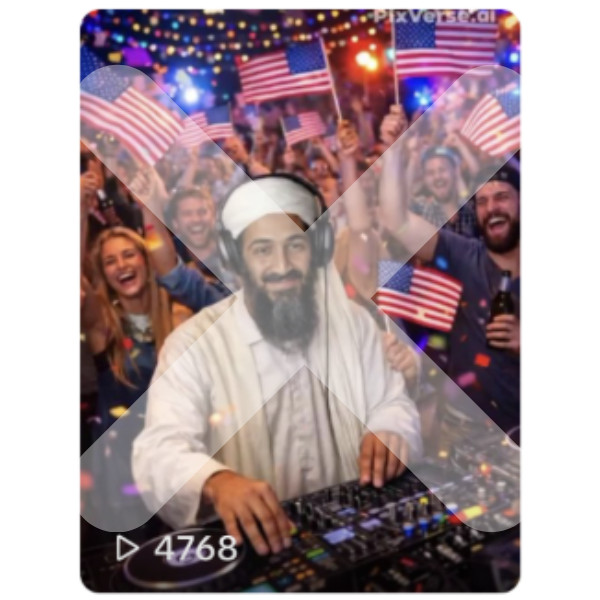
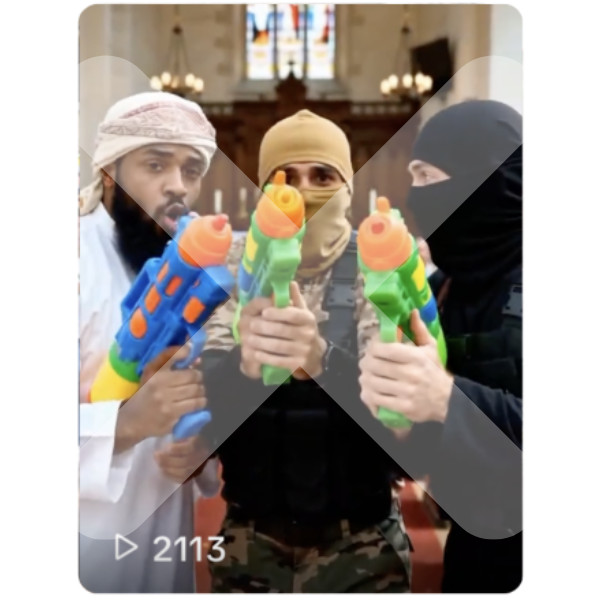
- Slop Jihad consists of mainstream AI-templates, such as fan-cam filters, dance videos, and cartoon doppelgängers of official content, adapted by supporters to feature jihadist ideologues and attackers instead. These mainstream trends have crossed over into terrorist support circles, with extremists from across the ideological spectrum involved in creating Slop Jihad content.
- Slop Jihad content relies less on ideological messaging and more on the glorification of violence, a trend among younger generations of supporters[1].Online communities comprising fandoms of mass-casualty attackers, and jihadist groups and trolls are united in venerating the impact of jihadist violence, ultimately shifting the style and form of propaganda within the wider jihadist support ecosystem.
- TikTok is the most important platform for Slop Jihad content: ISD research found 150 Slop Jihad videos from 71 accounts with more than 5.4 million total views. Additionally, ISD researchers found limited Slop Jihad content on Instagram and Facebook using the same keywords in search, such the name of ideologues or attackers that were featured in the content. Researchers believe TikTok’s predominance is a result of both its reliance on short-form videos and its ‘For You Page’ algorithm, which is hyper-targeted to user interests, the high level of general AI slop on the platform, and an existing entrenched ecosystem of jihadist support on the platform.
- Slop Jihad producers included supporters of Islamic State (IS) and al-Qaeda, members of the True Crime Community (TCC) community, and a subset of the TCC community known as Total Christian Death (TCD). ISD categorized Slop Jihad content producers into three distinct strands: Purist Slop Jihadists, TCD supporters and Shitposting ‘Slopagandists’. There is clear crossover between supporters of wanton violence and ideological violence, but these groups differ in their level of ideological rigidity from that typically ascribed to online jihadist ecosystems.
- IS ideologues who committed war crimes, shootings, bombings and other mass violence are the primary characters in Slop Jihad content. The most popular Slop Jihad content featured Zahran Hashim, the architect of the 2019 IS-linked Easter Day Sri Lankan bombings which killed 269 people and injured more than 500 others. ISD also found content supportive of terrorist leaders such as Osama bin Laden and several jihadist attackers from the past decade[2].
- A TCC subset known as Total Christian Death is driving much of the production of Slop Jihad content alongside supporters of IS and other jihadist groups. TCD community members appear to be lionizing attackers who have targeted Christians globally. Hashtags associated with the death tolls of prominent jihadist attacks, as well as TCD, link users on TikTok to more Slop Jihad content.
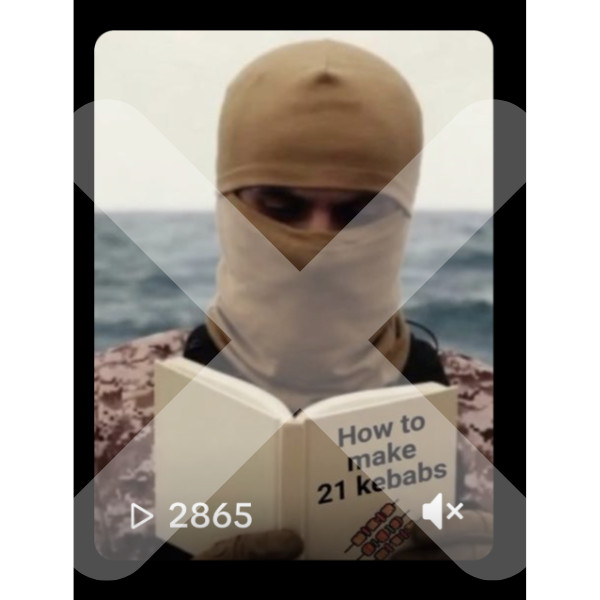
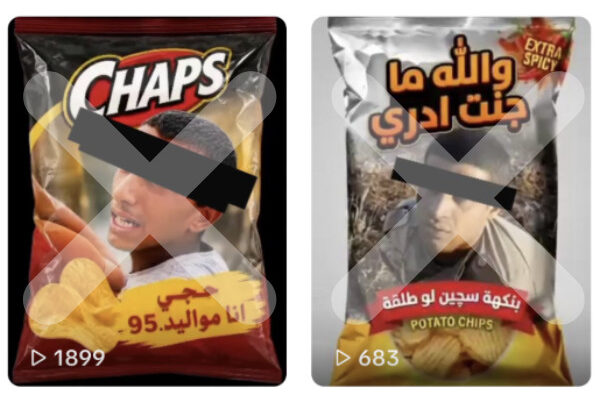
- Slop Jihad content is being leveraged to troll ‘enemies’ such as Shias, Yazidis and Christians, as well as other users who support mass casualty attackers who have targeted Muslims. ISD found AI-gen slop videos in the form of advertisments for potato chips that featured a young man from Camp Speicher begging for his life before he was killed by executioners affiliated with IS. The same man was also used in AI-generated videos where he is eating at a kebab shop, a reference to the use of kebab as an online slur associated with Muslim victims of terrorist attacks. This is an example of how some Slop Jihad content targets mass casualty attackers such as Brenton Tarrant, the prepetrator of the Christchurch mosque attack.
Introduction: A ‘Slop Jihad’ rises
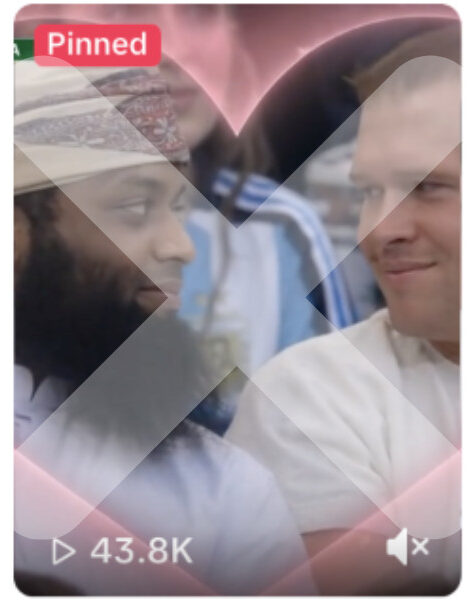
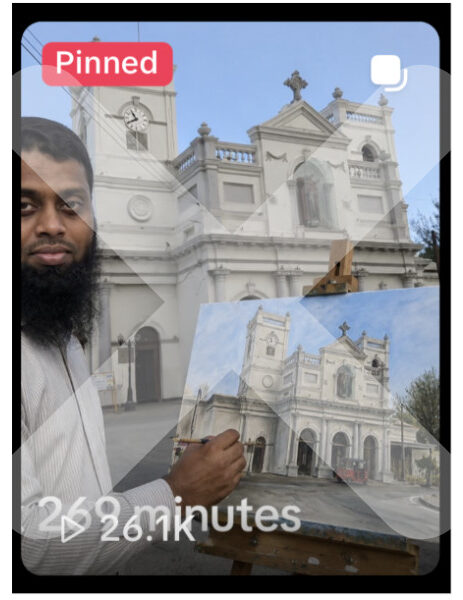
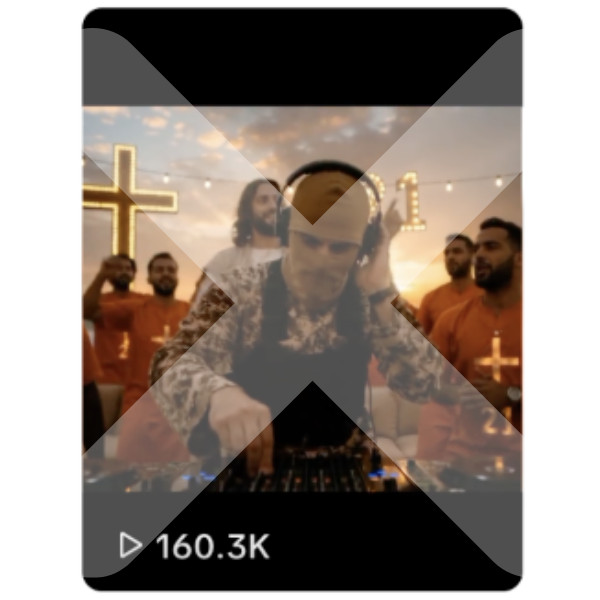
TikTok has breathed new life into Zahran Hashim—the extremist preacher, suicide bomber and ‘mastermind’ of the Sri Lankan 2019 Easter Day bombings that killed 269 people and injured more than 500. Hashim can be found in videos facing off against Christchurch attacker Brenton Tarrant at an Ultimate Fighting Championship (UFC) weigh-in, attending football matches, DJing parties, painting churches, playing the piano, and wishing Christians a “happy Lent.” Known by some users on TikTok as ‘Saint Zahran,’ Hashim is one of a handful of jihadist ideologues and terrorists who become the face of the ‘Slop Jihad.’ His AI-generated likeness is central to a youth-driven shift of the ‘media jihad’ online.
ISD defines Slop Jihad as: “low-quality digital content produced in part, or in whole, by artificial intelligence in service of the ‘media jihad.’ The central strategic aim of Slop Jihad content is to wage a memetic war of resonance while promoting, legitimizing, and intimidating audiences in support of terrorist groups, ideologues and ideologies.”
The current era of Slop Jihad did not appear in a vacuum. It emerged from the decentralization of jihadist media operations online, and intersectionality between ideologically disparate extremist groups. It also reflects what Cory Doctorow has dubbed the “enshittoscene—” an era where online platforms haveprioritized commercialization and AI content over user experiences.
Collectively, these forces have hyper-charged the proliferation of hybrid, ‘non-traditional’ jihadist propaganda online. Between the decentralization of jihadist media operations, and a rise in AI slop across platforms, a new generation of jihadist supporters has come of age in a more hybrid extremist landscape focused on AI-assisted memetic warfare. While some jihadist groups have described the use of AI as ‘an obligation,’ they have also asked supporters to be ‘responsible’ with its use. However, younger supporters and the ecosystems of support they interact with have completely eschewed any organizational guidance. They are unleashing content glorifying terrorist ideologues and groups using mainstream gen AI video trends, such as football fan cams.
Methodology
Over a six-month period, ISD led an ethnographic study examining how little control jihadist groups actually have over a younger generation of propagandists waging a Slop Jihad in the name of their groups, ideologues, and ideologies. This report focused on this subset of the jihadist ecosystem online which has intersections into other violent online subcultures—for example, it shares the same aesthetics and discourse as True Crime Communities (TCC) as well as neo-Nazi accelerationism. Researchers tracked Slop Jihad accounts using specific keywords associated with producers identified through recommendations to research accounts over the six-month study period. The keywords included the names of infamous ideologues and attackers, as well as hashtags affiliated with TCC subcommunities such as Total Christian Death (TCD). Simple searches for specific jihadist groups and parts of the TCD ecosystem also readily surfaced relevant material. Researchers did not interact with any of the videos other than to view them[3]. Once researchers had viewed five videos featuring the material, their observation accounts began receiving recommendations for similar content in their For You Feeds without further prompting. As of 2 September, 42 of the identified accounts remained active; as of 8 September, all had been removed.
Researchers were also recommended benign genAI content in For You feeds, presumably because research accounts were used to watch genAI content. Researchers did not set out to test the algorithm. However, understanding how content is sorted and selected for viewing in the ‘For You’ feed has been the focus of previous research[4] that appears to corroborate researchers observations. As of 8 September, all of these accounts had been removed.
After identifying Slop Jihad material, researchers categorized producers and their content. Content producers were categorized according to the extent to which their content outputs focused on jihadist groups, ideologues and attackers. This allowed analysts to distinguish accounts that clearly supported recognized groups such as IS or al-Qaeda from those that appeared to support the violence inflicted by jihadist groups or lone actor attackers. It also enabled researchers to distinguish TCD accounts from supporters of recognized jihadist groups, and vice versa.
Researchers found that regardless of how a content producer was categorized, Slop Jihad producers typically interacted with Slop Jihad content regardless of what type of account produced it. Engagement between different categories of accounts typically took place in the comments of a Slop Jihad video, or through reshares and likes. Videos were also categorized on the basis they featured a jihadist ideologue, attacker, or specific group.
All videos viewed and labeled as Slop Jihad content, featured one or more jihadist ideologues or attackers. Many of the videos appeared to serve the same purpose: glorifying or supporting the violence of a jihadist attacker or ideologue. However, the use of specific avatars, usernames and bios helped distinguish jihadist accounts from TCD accounts.
A decentralized ‘media jihad’
More than a decade ago, IS released a publication titled “Media Operative, You Are a Mujahid,” an official al-Himmah Library publication. As a work of propaganda about propaganda, the text stated that those engaged in the media jihad were not simply sitting on “sofas in beautiful houses,” but were in fact “an istishaddi [suicide bomber] without a belt!” In the years since, several official publications and speeches have described the need for continued media jihad. At the same time, there has been an intense period of decentralization across the ecosystem of media jihad on the open web.
Numerous support outlets functioning as the backbone of the unofficial ecosystem of support for the group were created by disparate bands of supporters across the globe. When key official outlets went silent as IS lost territory in Iraq and Syria, its franchise system of provinces were buoyed by an interconnected support ecosystem of more than 107 outlets[5].
These outlets, which ISD continues to document as part of its ongoing unofficial census of IS media, have predominately maintained similar design and narrative standards[6]. Support outlets have often sought to replicate one another’s aesthetics or mimic those of official group media, rather than incorporating broader internet trends or coopting the aesthetics of other extremist communities.
Some of the most notable examples of this mimicking involved al-Qaeda and IS media products. Although both groups ultimately diverge ideologically, stylistic comparisons of al-Qaeda’s widely distributed English-language magazine Inspire and the magazine produced by IS of Khurasan Province (ISKP) known as Voice of Khurasan, illustrate just how much of the jihadist media ecosystem often mimics one another. Voice of Khurasan borrowed not only from Inspire but also from previously released IS magazines such as Dabiq and Rumiyah. Another more recent example of this mimicry within the jihadist media ecosystem is the recently released unofficial al-Qaeda outlet al-Bayan newsletter: this clearly pilfered the style and layout of IS’ longstanding official newsletter al-Naba.
However, between 2020 and 2021, as the effects of the COVID-19 pandemic set in, the contours of the aesthetics and language used in the jihadist digital ecosystem began to shift at the margins. Younger supporters began experimenting with aesthetics and vernacular of the extreme right, creating new and bizarre forms of short-form propaganda in support of groups, ideologues and ideologies associated with both IS and al-Qaeda. ISD researchers documented this change in an expansive study of youth-oriented content in support of the Salafi ecosystem in both the West and across North Africa and the Middle East. At the time, supporters of IS and other jihadist groups similarly copied far-right ‘chanspeak,’ integrating it into the jihadist lexicon online. ISD researchers called this new generation of propagandists the ‘Alt-Jihad’[7].
The Slop Jihad and memetic warfare
During the past five year, the once emerging Alt-jihadist ecosystem has become an established feature of online jihadist communities. It combines low-quality, mass-produced images and videos created with generative AI with visual aesthetics drawn from extreme-right and TCC networks[8].
Scholars have noted that jihadist propaganda, particularly that of al-Qaeda and IS, typically serves three strategic aims: “propagation, legitimization, and intimidation.” However, a fourth strategic aim, memetic resonance, now encapsulates all three at once.
Much like subcultures of nihilistic violence such as TCC, Slop Jihad content producers do not call for violence but instead revel in the violence committed by individual jihadist attackers or ideologues. This enthusiasm for the violence inflicted by individual attackers or ideologues is akin to the ‘fandoms‘ of mass killers. Researchers from the Italian Team for Security, Terroristic Issues & Managing Emergencies, have documented ‘brain rot’ genAI content being primarily focused on the “fascination with violence for violence’s sake,” as part of their research.[9]
Memetic resonance in an age of sticky platforms is a vital strategic goal for younger extremists online. While Slop Jihad content may be dismissed at face value as unserious, the importance of its creation, sustainability and growth serve essential functions for young supporters of a range of jihadist and extremist groups online. As academics have noted, AI slop actually provides “a legitimate means of collective sense-making, with the potential to express meaning and identity.” Slop Jihad content also ensures there is a continuous supply of propaganda, as noted by scholars of AI slop in that “it offers a supply-side solution.”
One of the more prominent examples of this memetic resonance and the use of genAI to bring it to life as part of the Slop Jihad, was a user producing SpongeBob slop jihad content as an homage to IS. Supporters of IS were using SpongeBob memes back in 2021, and GenAI has enhanced the capacity to bring SpongeBob as a jihadist to life. One user created a video that mimicked an actual IS video that involved drowning prisoners in the cage, in the SpongeBob version the prisoners in the cage were pigs in orange jumpsuits and affiliated with the current Syrian government. While the video generated only 3,970 views on TikTok, another video posted by the same user depicting Squidward firing a rocket-propelled grenade launcher at a truck of pigs representing the Syrian government while SpongeBob drove them in a Toyota Hilux through the desert. The video generated more than 34,500 views and drew on themes of hatred of the current Ahmad Shara’a-led Syrian government that has appeared in official IS propaganda.
By combining the use of SpongeBob and tropes taken from IS official propaganda, the SpongeBob slop jihad content makes ideological viewpoints both easily accessible and resonant to younger audiences. In fact, the user was able to draw on SpongeBob meme lore in the Middle East and North Africa that included the use of a ‘Qa’ el-Hamour’ [a regional stand-in for Bikini Bottom, where SpongeBob lives in the cartoon series] online trend in the region. By combining these elements of ideology and memedom, the content is meant to deliver memetic resonance intended to impact younger audiences.
The communities of Slop Jihad
Much of the material reviewed by ISD researchers repurposed official propaganda through generative, transforming it into cartoon formats that could evade moderation systems, for example. Other videos used realistic yet obviously synthetic images and videos that demeaned victims of terrorist attacks while celebrating terrorist violence. TikTok emerged as a central venue for this activity, sitting at the intersection of established jihadist propaganda networks and communities centered on fandoms of mass-casualty killers.
The interplay between jihadists and these fandoms is quickly becoming a defining feature of the extremist online environment. The 2026 Europol Terrorism Situation Trends report noted “the boundaries between different terrorist ideologies and other forms of violence were increasingly blurred.” This was “particularly visible in the context of jihadist and right-wing terrorism and violent extremisms.” Europol also noted that in “jihadist spheres, perpetrators also occasionally displayed less ideological depth,” a trend reflected in Slop Jihad[10].
In an effort to untangle the increasingly ‘blurred lines’ of violence, terrorist ideologies and other violent extremists producing Slop Jihad content, ISD researchers classified the Slop Jihad community into three specific categories:
- Purist Slop Jihadists: A subset of users who support IS, al-Qaeda or other jihadist group ideologies. They create genAI content that mimics official and unofficial propaganda using mainstream AI filters. The primary goal of this community is to get official content into Slop Jihad spaces that would be viewed and shared by other extremist communities; they also attempt to create viral content out of IS material such as AI anime versions of official news bulletins. Purists are firmly involved in the production of content that supports ideological goals of IS or al-Qaeda using genAI.
- Total Christian Death Supporters (TCD or TCDers): A subset of the TCC community, these are fandoms of jihadist ideologues, groups and attackers. The primary motivation of TCDers is to troll victims, typically Christians, to avenge attacks targeting Muslims such as the Christchurch Mosque mass shooting. Many TCDers will use the numbers ‘269’ in their usernames or posts, a reference to the death toll in the Sri Lankan Easter Day bombings. TCD users often focus on specific personalities within the jihadist sphere, although they may also venerate other perpetrators. For example, users have been known to venerate Dominic Ongwen, a commander in the Lord’s Resistance Army (LRA) due to his war crimes. TCD accounts want their content to trend or go ‘viral’ by celebrating terrorist violence, creating overlap with communities of younger, purist jihadists.
- Shitposting Slopagandaists: This subset of users is not wedded to specific ideologues and will use Slop Jihad content simply to troll other users. Shitposting Slopagandists may not classify themselves as purists or TCD community members. Instead, they use the terrorist violence in Slop Jihad to drive engagement while also demeaning victims of violence. This group of users can be considered non-ideological and are typically interested in virality over ideological dimensions of the content they produce. These users have been referred to as ‘edgelords’ and will often self-identify online as live action role players (LARPers).
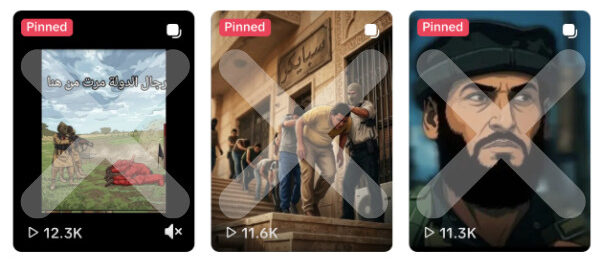
The Slop Jihad content documented by ISD appears to run through these three communities of users, with memetic resonance key in all of them. While shitposting slopagandists are concerned with virality for its own sake, both purists and TCDers are focused on producing trending content for their specific communities of support. Naturally, all three communities of users end up consuming and resharing each other’s content, regardless of intent. ISD researchers found purists responding to TCDers in comments sections, and TCDers, as well as purists, resharing shitposting slopagandists content because it demeaned terrorist attack victims.
Researchers similarly reviewed the most popular forms of Slop Jihad content. The three most used formats of AI content all had mainstream appeal, echoing content shared by mainstream audiences:
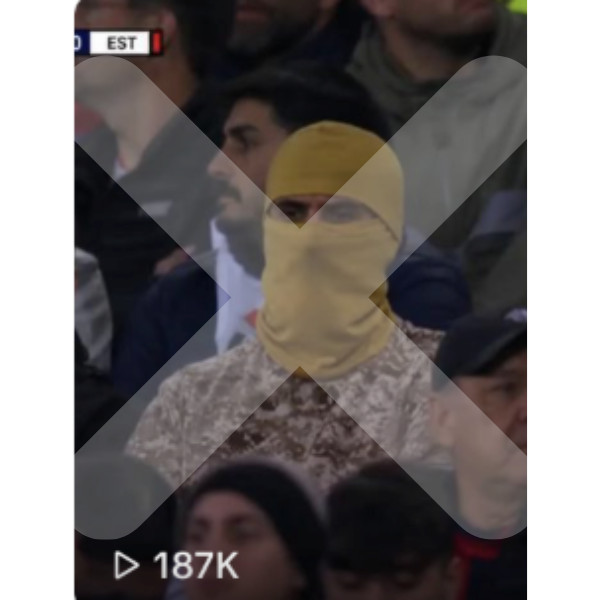
- Fan cam videos: During the World Cup, online audiences used genAI video templates to feature themselves in the stands of football games. Young supporters of jihadist groups and TCD users use the same templates to place jihadist ideologues and attackers in the stands. ISD researchers found videos using the same genAI stadium fan cam video templates of IS’s Abu Nabil al-Anbari and an IS prisoner in the stands. Researchers also found several fan cam videos of Zahran Hashim sitting alongside Brenton Tarrant, one of these videos generated 187,000 views on its own.
- Viral dance videos: Using PixVerse AI and Viggle AI, purists, TCDers and shitposters are placing terrorist attackers into dance videos that celebrate mass casualty attacks. Videos of the Crocus City Hall attackers dancing in unison over the victim death toll were observed several times during the period of data collection. Users also combined prominent terrorist figures such as Jihadi John, Abu Nabil, Omar Mateen and others into the same viral genAI dance videos.
- Official propaganda cartoons: Some propagandists are turning ideologues, fighters and even official terrorist group news bulletins and images into anime duplicates using CapCut filters. The anime versions of the official propaganda appear to bypass moderation systems, but it remains unclear why that is the case. One account reviewed by researchers posted 25 anime versions of official IS propaganda between June and August 2026. The anime versions of official propaganda reviewed during that period accumulated more than 137,000 views collectively.
Conclusion: violence binds the Slop Jihad
The interplay between younger supporters of IS, al-Qaeda, other jihadist groups, and supporters of mass killers is part of the evolving landscape of online extremism. Five years ago, young jihadist supporters were pilfering aesthetics and language from the far right. Today, they are leveraging AI to create propaganda that appeals to fandoms of mass killers, while also engaging with material created by subsets of these same communities.
This cross-community interplay is at the heart of the Slop Jihad online, which has reshaped how jihadist propaganda is created and consumed. It has brought together an engaged audience of young jihadist supporters, subsets of mass-killer fandoms and shitposting trolls. At its core, the Slop Jihad online community coalesces around the celebration of violence, but it emerged from dynamics rooted in the decentralized ‘media jihad’ ecosystem. These dynamics are reshaping how jihadist violence is communicated online, as well as how audiences engage with the groups, ideologues and attackers who have called for and participated in terrorist violence.
To this digitally born generation of users, the Slop Jihad is representative of a profound change that has taken place over the past five years. In an era marked by rapid advancements in technology, profound shifts in the world’s geopolitical order, and an increasingly balkanized set of communities across social media platforms, young people online are creating bizarre, hybridized extremist content that can no longer simply be categorized as support for singular groups or well-defined ideologies.
The established aesthetics of terrorist groups and the copycat outlets in their unofficial support ecosystems lack the memetic resonance of viral formats such as a World Cup fan-cam video featuring a terrorist ideologue in the stands. Younger Slop Jihad supporters of have grown up in an internet culture that places premium on virality. Although these users come from different communities online, they are ultimately connected by their support of jihadist ideologues, groups and attackers.
The appeal of Slop Jihad content is altering the shape of jihadist support online. A user may not be interested in the ideological intricacies of IS or al-Qaeda but will rally around the notion that a jihadist attacker has ‘owned’ a victim or another community. This shift, not based on ideology, but based on how content is created and valued, is what is making the online landscape of extremism and specifically jihadist support appear confusing. At face value, the community appears ideologically aligned with jihadist groups; however, while some users express such ideological alignment, most appear to be united by their shared support of violence.
The use of genAI content to communicate that violence becomes a key point of appeal for these younger audiences. The content and the communities which surround it represent a trajectory that will test academics, researchers, analysts and law enforcement in understanding what online support for terrorist groups such as IS and al-Qaeda looks like in 2026 and beyond.
End notes
[1] The latest United Nations Monitoring Team report outlined, youth “increased propaganda and outreach tailored to younger audiences,” and “some evidence to suggest that ideology can be progressively less important for recruitment the younger the potential recruit, and that the appeal to violence itself can be a driver for recruitment and mobilization.”
[2] This includes Abu Nabil al-Anbari, the speaker in the 2015 video of an execution of 21 Coptic Christians on a beach in Libya, Mohammed Emwazi, the British IS executioner notoriously known as the ‘Jihadi John,’ Omar Mateen, IS-linked attacker of the Pulse Night Club in Orlando, Florida, and IS-linked attackers involved in the Moscow Crocus City Hall attack.
[3] Research accounts did not follow, like, or interact with producers or videos during this period. The accounts were used for search and observation.
[4] Parnell T, Hunt D, Wilkins J, İnce B, Sharpe H, Schmidt U, Bartel H. Falling down the rabbit hole’: a thematic analysis of young people’s views on TikTok algorithms and eating disorder content. “In comparison to other SM platforms such as Instagram or X (formerly Twitter), TikTok places less emphasis on following and subscribing to accounts, leading to a much less explicit representation of the user’s network from which the content they see is drawn; instead, the algorithm directs the flow of content. In other words, although algorithms are used across a wide range of SM, TikTok is the only platform that puts the algorithm at the core of the social experience it offers its users.” https://pmc.ncbi.nlm.nih.gov/articles/PMC12831324/
[5] This census consists of active or partially defunct unofficial media outlets supporting IS across platforms. The number of outlets is bound to grow, as new outlets are birthed on a weekly basis.
[6] However, the overall ‘sophistication’ of IS media ecosystem has declined since its territorial losses in Iraq and Syria. Much of this is the result of decentralization, and what has been ‘do-it-yourself’ propaganda efforts. Slop jihad takes this one step further, where sophistication is not the objective, but rather memetic resonance.
[7] Activists online have also referred to terminally online Islamists that parrot extreme right tropes and peddle similar content as the “Akh-Right.” The Alt-Jihadists, however, take this one step further with overt support for groups such as al-Qaeda and IS.
[8] Much of the Slop Jihad content now being produced in these communities sits across what has been thought of as ideological poles, however, shared proclivities and targets for violence, make them important to extremists from across the spectrum.
[9] The same researchers similarly documented “mixed, unclear and unstable” ideological communities using GenAI on TikTok in a similar fashion. The researchers noted “as regards to genAI, significant use of this technology has been detected within the identified hybrid ecosystem.” https://www.sicurezzaterrorismosocieta.it/wp-content/uploads/2026/06/ebookBook_SicTerSoc_23-2026-Giardini_Pugnana_Ristuccia.pdf
[10] Some terrorism scholars have referred to this phenomenon as ‘fast-food terrorism‘ whereas radicalization incubation times appeared to be getting shorter, younger people are gravitating toward ‘terrorism’ as if it were ‘a source of dopamine to satisfy carnal impulses.’